We are #1 trusted suppiler for Vibration Isolation/ Flexible Connection/ Expansion Joints/ Architectural/ Acoustics
  • Home
  • Products
  • ABOUT US
  • BLOG
  • CONTACT US
Enquiry Now
Menu

Posts by irfan

29 Oct
Blog

Acoustic Clips Break the Wall’s Sound Bridge

  • November 1, 2026
  • By author-avatar irfan
You've spent good money on a "soundproofed" party wall. Extra drywall layers, mineral wool in the cavity, the wor...

Continue reading

21 Oct
Blog

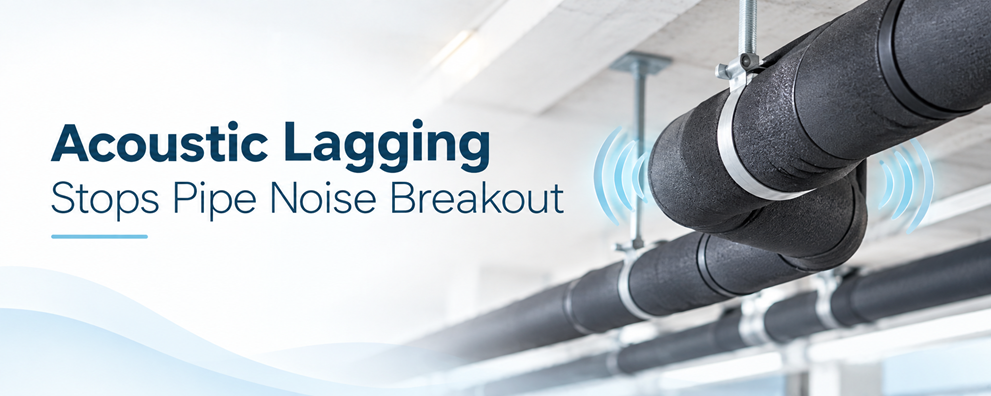
Acoustic Lagging Stops Pipe Noise Breakout

  • November 1, 2026
  • By author-avatar irfan
Ever stood in a hotel corridor and heard someone flush a toilet three rooms down, clear as day, through what's su...

Continue reading

Quiet Ceiling Rubber Hangers
14 Oct
Blog

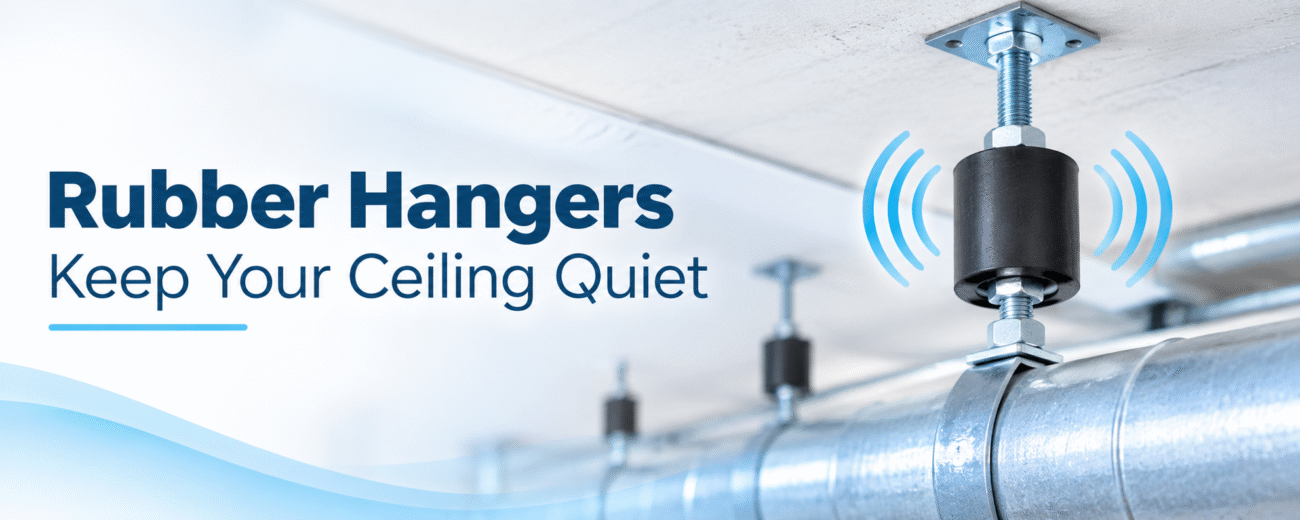
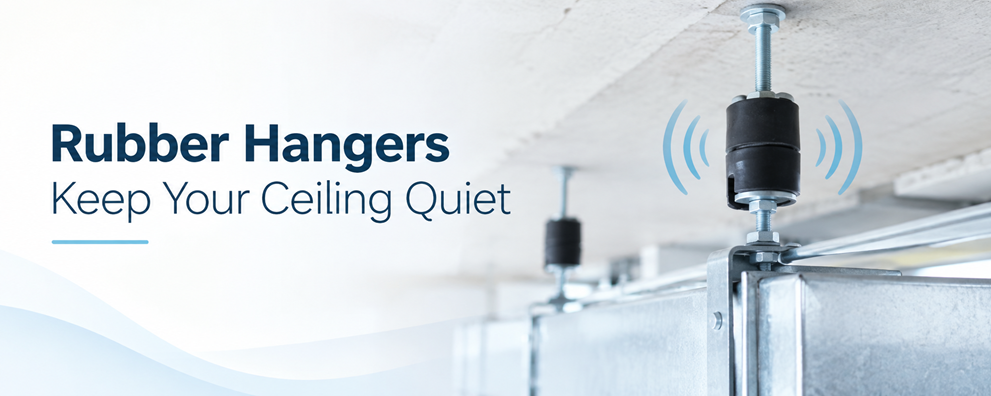
Rubber Hangers Keep Your Ceiling Quiet

  • November 1, 2026
  • By author-avatar irfan
You know that low hum that shows up in a brand new building about three months after handover? The tenant on the ...

Continue reading

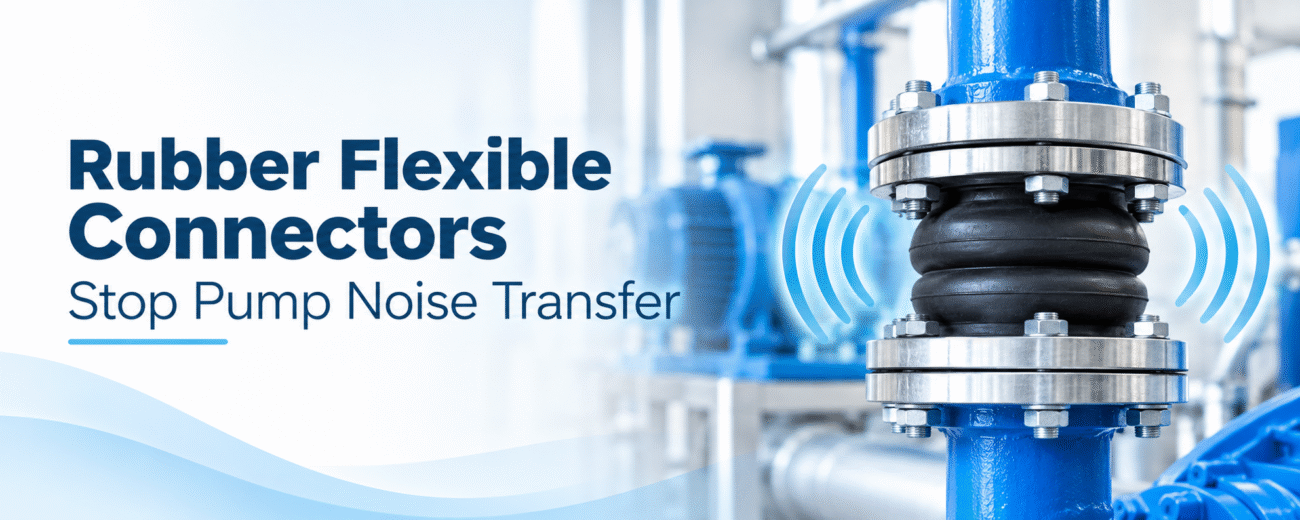
A pump room is loud enough on its own. What makes it worse is when that noise doesn't stay in the room, when it travels down the pipework into every floor the pipe passes through. This happens more often than it should, and the cause is almost always the same thing, a pump connected directly to rigid pipework with no flexible element to absorb the vibration before it enters the piping network. Pumps vibrate constantly while running, that's just the nature of rotating machinery. If the connection between the pump and the pipe is rigid, every bit of that vibration transfers straight into the pipe wall and travels as far as the pipe run goes. A rubber flexible connector exists specifically to break that chain at the source, right where the vibration starts. Why Rigid Pipe Connections Cause More Problems Than Noise Noise transmission is the symptom most people notice first, but it's not the only cost of a rigid pump connection. Pipework fatigue is a quieter, more expensive problem building up in the background. Constant cyclic vibration stresses welds, flanges, and joints throughout the piping system, and over years of continuous operation, that stress shows up as leaks, cracked welds, and premature pipe failure, usually at the connections closest to the vibration source. There's also the misalignment problem. Thermal expansion moves pipework as temperatures change throughout the day, and if there's no flexible element anywhere in the run, that movement gets absorbed by stress concentration at the nearest rigid joint instead of being accommodated gracefully. What's Actually Happening Inside a Rubber Expansion Joint A rubber flexible connector isn't just a soft section of pipe, it's a precision engineered multi layer assembly. Vibro Limited's VIBRO CONNECTORS VRSF uses advanced multi layered construction with vulcanization technology, where the inner layer is formulated from application specific rubber compounds, natural rubber, styrene butadiene rubber, nitrile rubber, EPDM, or fluoroelastomer, chosen to match the chemical compatibility and temperature of whatever's actually flowing through the pipe. High strength nylon cord fabric reinforcement sits beneath that inner layer, providing the pressure resistance the joint needs to handle real operating conditions rather than just lab test values. For installations needing greater displacement capacity, the VIBRO CONNECTORS VRTF uses a double sphere design that offers a longer installation length than a traditional single sphere joint, giving it higher flexibility and movement accommodation where space allows. And for threaded connections common in smaller commercial installations, the VIBRO CONNECTORS VRTU combines a vulcanized double ball rubber body with a movable metal joint across three precision engineered layers, delivering the same vibration absorbing function in a more compact, threaded format. Where This Actually Gets Specified Rubber flexible connectors show up anywhere rotating or pulsating equipment meets a rigid pipe network: 1. Pump and compressor connections in water supply and process piping 2. HVAC chilled and heating water systems, particularly near plant room equipment 3. Chemical processing and power generation facilities handling demanding media and pressure conditions 4. Marine installations where equipment vibration and hull flex both need accommodation at once Each of these shares the same underlying need, something flexible enough to absorb vibration and movement without compromising the pressure integrity of the system it's part of. Industrial Demand Keeps This Market Moving Rubber expansion joints remain one of the larger segments in industrial vibration control, with one widely cited estimate putting the global market at roughly USD 1.8 billion in 2026, growing toward close to USD 3 billion by 2035 at a compound annual rate near 5.7%. Growth estimates vary quite a bit between research firms depending on how they define the category, but the direction is consistent across all of them, driven by industrial infrastructure renewal and stricter requirements around leak prevention in sectors like chemical processing and power generation. Driver Why it matters for connector specification Aging industrial infrastructure Replacement programs favour flexible joints over rigid connections that failed previously Stricter leak prevention standards Chemical compatible rubber compounds reduce failure risk at the connection point Renewable and power generation investment New plant construction specifies vibration isolation as standard, not optional Marine and offshore applications Combined vibration and movement accommodation makes rigid connections impractical The variation in material compounds available matters here more than in almost any other product category, because choosing the wrong rubber for the conveyed media can shorten service life dramatically, regardless of how well engineered the reinforcement layers are. The Selection Mistake Worth Avoiding The mistake that causes the most premature failures is selecting a connector based on pipe size and pressure rating alone, without checking the rubber compound against what's actually flowing through the system. A joint rated correctly for pressure can still fail early if the inner layer isn't chemically compatible with the fluid, since degradation from the inside rarely shows up until the joint has already weakened significantly. Always confirm media compatibility first, then confirm pressure and movement ratings second. If you're specifying connections for pump or compressor installations, look through the full Vibro Connectors range and check both pressure rating and media compatibility before finalising your order. And if you're working with an unusual media or temperature range, our technical team can help confirm the right compound, just reach out here. Here's the takeaway worth acting on. Before your next pump installation, confirm the flexible connector's rubber compound against the actual media it'll carry, not just the pressure rating, because that's the detail that determines service life far more than pipe diameter does. Has your team ever had a connector fail early because of a media compatibility issue rather than a pressure or sizing problem? Share what happened in the comments, we'd like to compare notes.
07 Oct
Blog

Rubber Flexible Connectors Stop Pump Noise Transfer

  • November 1, 2026
  • By author-avatar irfan
A pump room is loud enough on its own. What makes it worse is when that noise doesn't stay in the room, when it t...

Continue reading

28 Sep
Blog

Acoustic Clips Break the Wall’s Sound Bridge

  • September 11, 2026
  • By author-avatar irfan
You've spent good money on a "soundproofed" party wall. Extra drywall layers, mineral wool in the cavity, the wor...

Continue reading

21 Sep
Blog

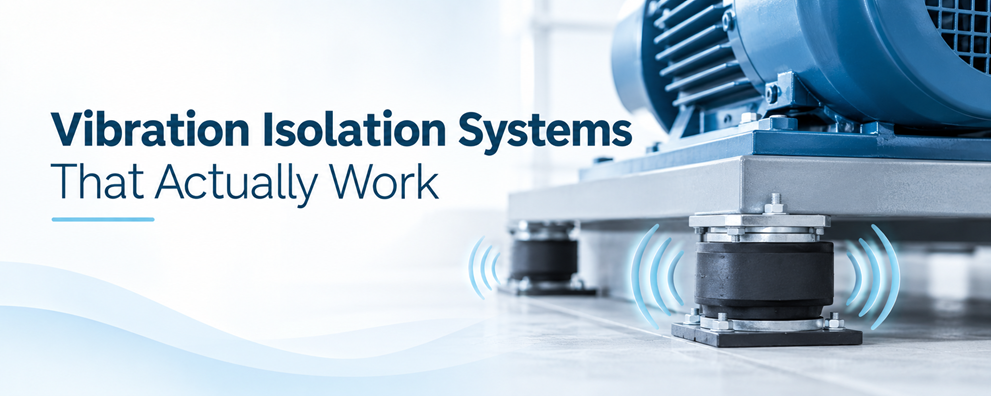
Vibration Isolation Systems That Actually Work

  • September 11, 2026
  • By author-avatar irfan
Ask any facilities manager who inherited a badly isolated chiller plant what the fix cost, and the answer is almo...

Continue reading

14 Sep
Blog

Acoustic Lagging Stops Pipe Noise Breakout

  • September 11, 2026
  • By author-avatar irfan
Ever stood in a hotel corridor and heard someone flush a toilet three rooms down, clear as day, through what's su...

Continue reading

07 Sep
Blog

Rubber Hangers Keep Your Ceiling Quiet

  • September 11, 2026
  • By author-avatar irfan
You know that low hum that shows up in a brand new building about three months after handover? The tenant on the ...

Continue reading

28 Aug
Blog

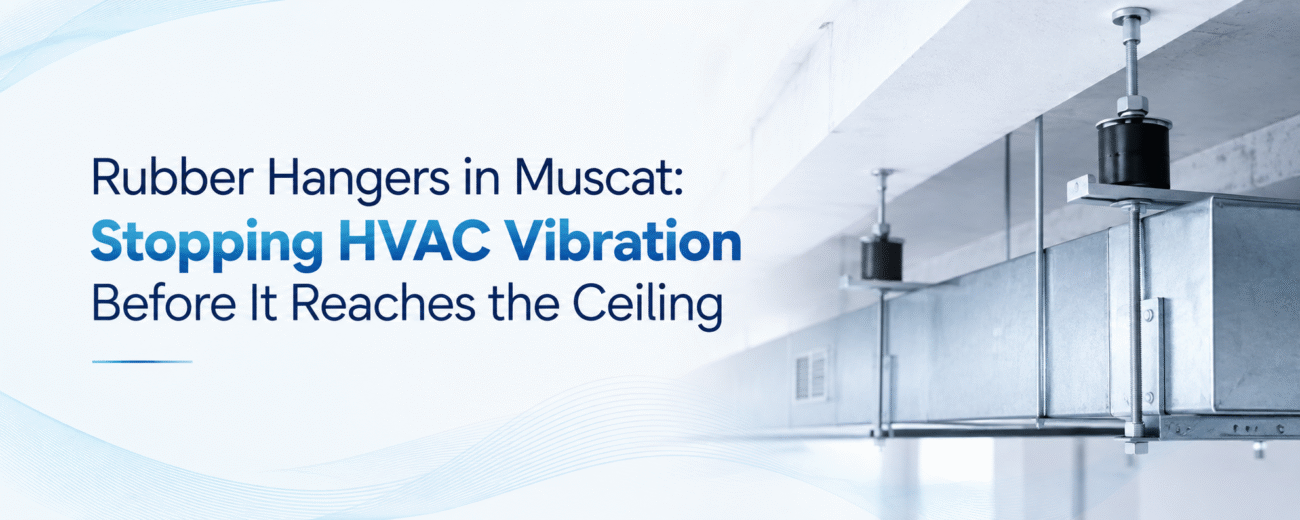
Rubber Hangers in Muscat: Stopping HVAC Vibration Before It Reaches the Ceiling

  • August 31, 2026
  • By author-avatar irfan
Walk through the ceiling void of almost any new hotel or residential tower going up along Muscat's coastline righ...

Continue reading

18 Aug
Blog

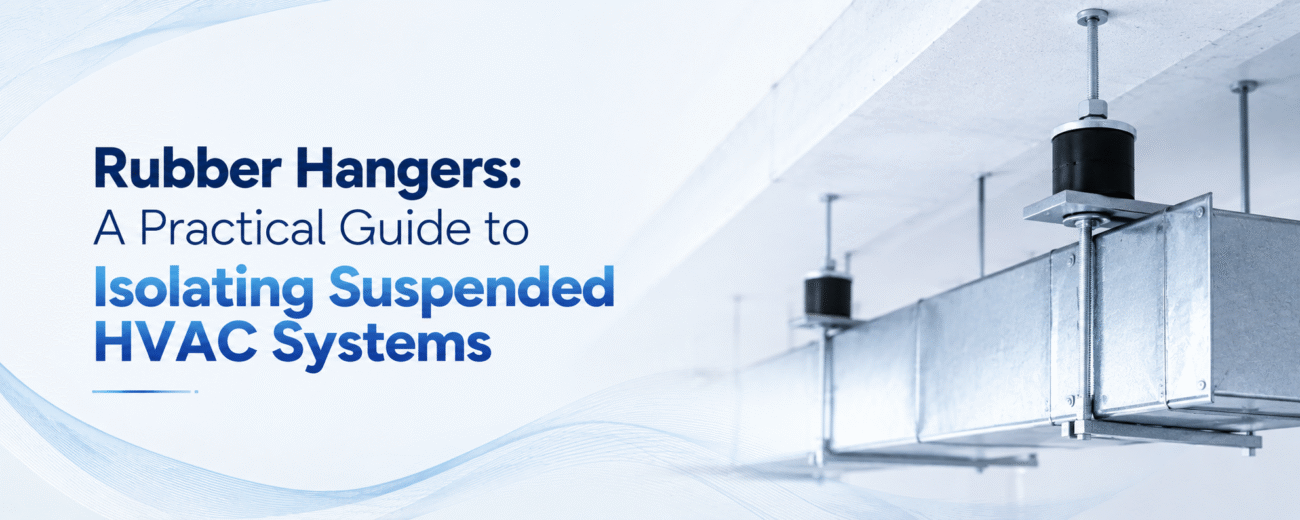
Rubber Hangers: A Practical Guide to Isolating Suspended HVAC Systems

  • August 31, 2026
  • By author-avatar irfan
Every mechanical contractor has had the conversation at least once: the building is finished, the client walks th...

Continue reading

  • 1
  • 2
  • 3
  • 4

We are #1 trusted suppiler for Vibration Isolation/ Flexible Connection/ Expansion Joints/ Architectural/ Acoustics.

Facebook Linkedin Twitter Youtube Instagram
QUICK LINKS
  • About Us
  • Contact Us
PRODUCTS
  • Vibro Hanger
  • Vibro Isolator
  • Vibro Pads
  • Vibro Lag
CONTACT

# 1370
92 Castle Street
Belfast United
Kingdom BT 1HE

  • info@vibrolimited.uk
Copyright 2025 Vibro Limited. All Rights Reserved.
  • Home
  • Products
  • ABOUT US
  • BLOG
  • CONTACT US

×
Shop
  • →
  • Email