
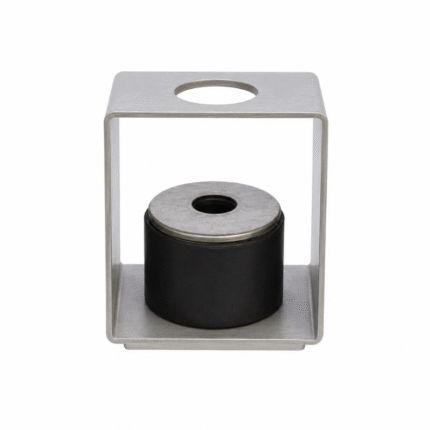
VCHN VIBRO HANGER NEOPRENE
VIBRO HANGER Model VCHN Vibration Isolation Hangers are specifically engineered to effectively mitigate the transmission of vibration and structure-borne noise generated by suspended light mechanical systems, including piping networks, ductwork, and associated equipment. These hangers play a critical role in maintaining acoustic comfort and structural integrity by isolating dynamic loads and preventing vibration propagation through building elements.
Each Model VCHN Hanger integrates a color-coded elastomer insert operating in shear, paired with a high-strength steel load washer, all securely assembled into a precision-formed or welded steel hanger bracket. The use of elastomer in a shear-loaded configuration, rather than the conventional compression mode, provides significant technical advantages. Shear loading increases the permissible deflection range of the elastomer, thereby enhancing strain capacity while simultaneously minimizing material fatigue and long-term degradation. This results in improved service life and consistent vibration isolation performance over extended operational periods.
The color-coded elastomer system ensures accurate load identification and selection, allowing engineers to match hanger capacity to the specific weight and vibration characteristics of the suspended system. Furthermore, the combination of stamped or welded steel bracket construction ensures both mechanical robustness and flexibility of application across a wide range of installation environments.
From a cost-performance perspective, the VCHN Hanger represents a highly economical vibration control solution. Its optimized elastomer utilization, reduced wear rate, and simplified installation requirements contribute to lower lifecycle costs while delivering superior vibration attenuation compared to traditional compression-based isolation hangers.
In summary, the Model VCHN Hangers embody a unique and efficient application of elastomeric technology in vibration isolation systems—providing durability, reliability, and acoustic performance in HVAC, piping, and ductwork installations.
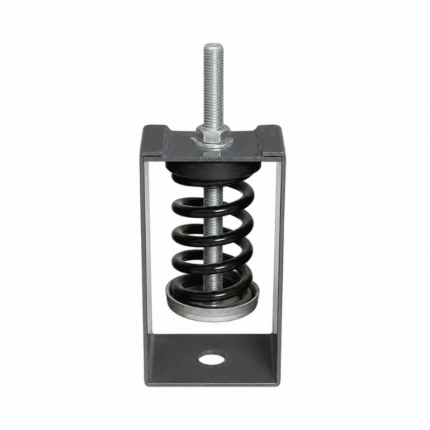
VIBRO VCHS SPRING HANGER
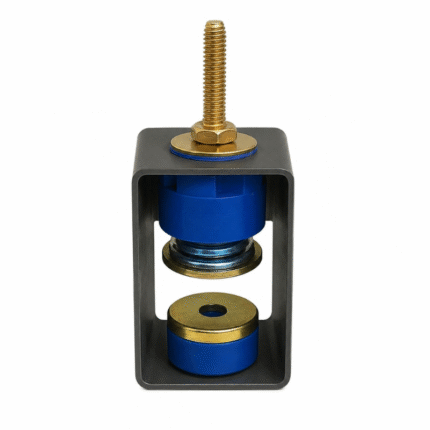
VIBRO VCHSN RUBBER HANGER
Why Vibration Isolation Hangers Matter Overhead
Suspended pipework and ductwork carry noise straight into ceiling structures if they're rigidly fixed. Vibration Isolation Hangers break that path by suspending the load on a spring or elastomer element instead of a solid rod-to-structure connection, keeping mechanical rooms quieter and reducing strain on the joints below.
This matters most in multi-story buildings, where a noisy pipe run on one floor becomes a complaint two floors down. The hanger absorbs the vibration before it ever reaches the slab it's fastened to.
Installing Vibration Isolation Hangers Correctly
Sizing depends on load and hanger spacing, not guesswork — an undersized hanger compresses fully and stops isolating, while an oversized one adds unnecessary cost. Proper Vibration Isolation Hangers placement, spaced according to pipe or duct weight per linear meter, stops rattling before it starts and extends the service life of overhead HVAC and piping runs across a building.
FAQ
Spring or elastomer hangers — which is better?
Springs handle heavier loads and low frequencies; elastomer types suit lighter lines. The right choice depends on what's being suspended.
Do these hangers need periodic inspection?
Yes — check for compression set or corrosion during routine mechanical maintenance, particularly in humid environments.


