
Description
How Neoprene Hangers Dampen Suspended Pipework
A rigid hanger transmits every bit of vibration straight from a pipe into the structure it's bolted to. Neoprene Hangers insert a resilient rubber element into that connection, absorbing vibration before it reaches the building frame and cutting the rattling noise that shows up in ceilings and adjacent rooms.
Neoprene handles moderate loads well and resists oil and general wear better than some other rubber compounds, which is part of why it shows up so often in mechanical room specifications.
Where Neoprene Hangers Are Typically Specified
Chilled water lines, moderate-vibration ductwork, and general mechanical piping are common applications. Neoprene Hangers aren't usually the first choice for very heavy loads or extreme low-frequency vibration — that's where spring hangers tend to take over — but for everyday mechanical piping, they offer a straightforward, cost-effective solution.
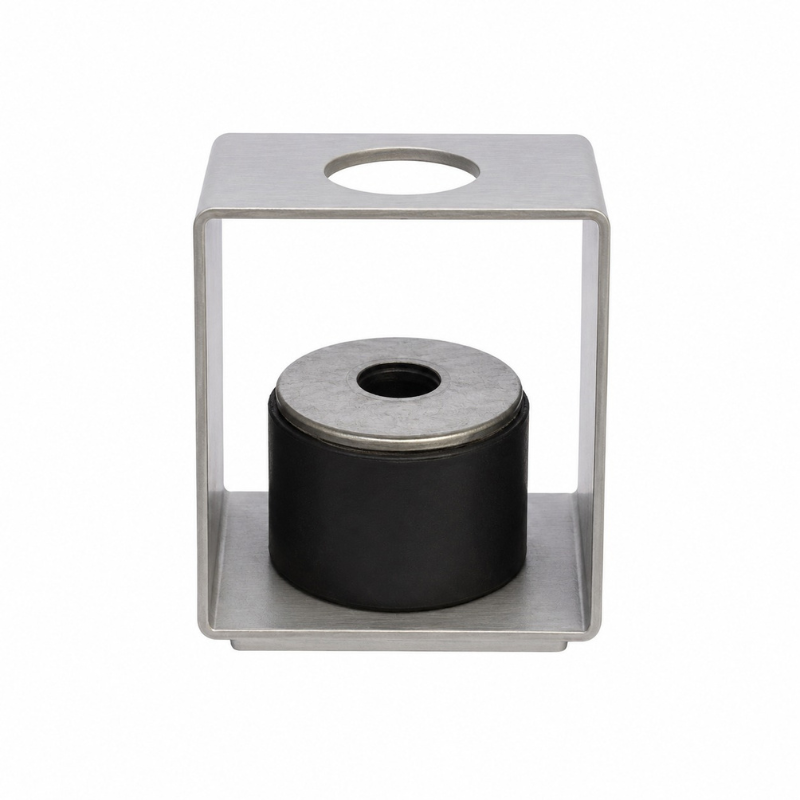
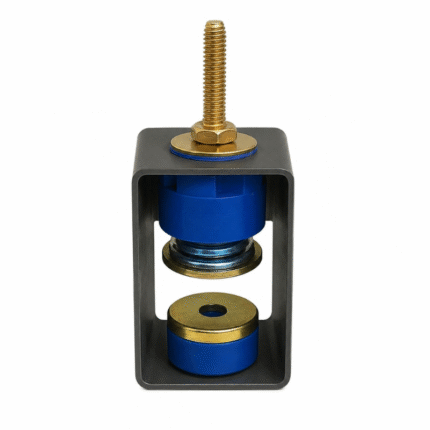
For applications requiring vibration isolators with a maximum static deflection of up to 0.225″ (5.7 mm) under operating loads, the recommended solution is a hanger assembly consisting of an elastomer-in-shear insert housed within a welded steel bracket, and equipped with a precision-stamped load-transfer cap.
The elastomer insert is molded from high-quality, oil-resistant compounds and incorporates a color-coded system that denotes load capacity, ensuring accurate selection and proper performance within the specified operating range.
The steel hanger bracket is engineered to withstand up to 1.5 times overload without structural failure. Additionally, its design accommodates support rod misalignment through an angular displacement of up to 30°, while maintaining complete isolation eliminating any risk of metal-to-metal contact or acoustic short-circuiting.
VIBRO HANGER Model VCHN Hangers are designed to provide effective isolation for suspended equipment that generates audible-frequency vibrations, as well as for mitigating noise transmission in piping and ductwork systems.
How do neoprene hangers compare to spring hangers?
Neoprene suits moderate loads and general vibration; springs handle heavier loads and lower frequencies more effectively.
Do neoprene hangers degrade with age?
Yes, gradually, especially with heat or chemical exposure — periodic inspection during routine maintenance catches this before it becomes a noise problem.
Are these hangers easy to retrofit onto existing pipework?
Generally yes, since they replace the hanger element rather than requiring changes to the pipe run itself.