


VIBRO CLIP RESILIENT SOUND ISOLATION CLIP VLP
VIBRO CLIP Resilient Sound Isolation Clip provides a professional level of acoustic separation of walls and ceilings. This engineered clip forms a decoupled assembly that does not allow sound vibration to pass through structural connections, which significantly enhances sound transmission class ratings in residential and commercial areas.
The clip system operates through the isolation of drywall and structural framing in a mechanical manner, breaking the direct contact that enables the transmission of noise between rooms. VIBRO CLIP, when properly installed, will convert ordinary construction into high performance acoustic barriers capable of stopping airborne sound as well as structure borne vibration. Installation is easy and economical as compared to other forms of isolation. The clips are directly connected to the existing studs or joists, and they support strong channels that carry finishing materials. This floating assembly is independent of the main structure and it absorbs the vibration energy before it can pass through walls or ceilings. VIBRO CLIP is the best in the management of impact noise, mechanical vibration and overall sound transmission between the adjacent spaces. The system is applicable in home theaters, recording studios, multi-family housing, offices, and any other application where high acoustic isolation is needed. Its strong construction means that it will not deteriorate with time and the streamlined design will fit perfectly into the normal construction programs. To builders and property owners who are interested in a soundproofing solution that can be relied upon to provide a quantifiable acoustic solution, VIBRO CLIP offers a proven performance at reasonable prices.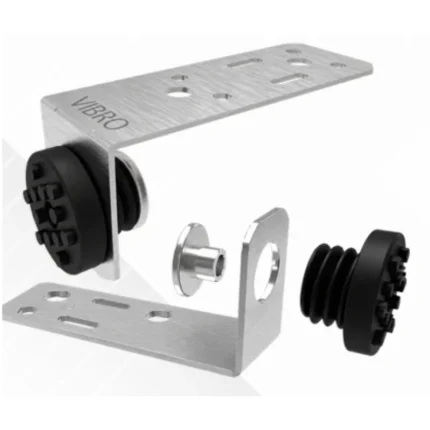
What Acoustic Clips Do for Ceiling Systems
Sound leaks through rigid ceiling connections before anyone notices the problem. Acoustic Clips decouple drywall or ceiling framing from the structure above, cutting airborne and impact noise between floors. Studios, offices, and residential builds rely on this decoupling to stop transfer at the source rather than trying to treat it after the fact.
The mechanism is simple: instead of screwing directly into joists, the clip holds a resilient furring channel that absorbs vibration before it reaches the ceiling surface. That small gap is what actually does the work — solid contact points defeat the purpose no matter how good the clip itself is.
Choosing the Right Acoustic Clips
Not every project needs the same load rating. A single-layer drywall ceiling and a double-layer acoustic assembly put very different weight on the same hardware, so picking Acoustic Clips suited to your ceiling weight and span keeps the isolation effective for years, not just at installation. Vibro's range covers standard drywall through heavier acoustic assemblies, with spacing guidance that varies by joist layout.
FAQ
Do Acoustic Clips work on existing ceilings, or only new builds?
They're typically installed during construction or a full ceiling rebuild, since they replace the direct fastening method rather than attaching over it.
How much noise reduction can I expect?
It depends on the assembly, but decoupled ceilings commonly cut impact noise significantly compared to direct-fixed drywall — exact figures depend on the full wall/ceiling buildup.


