

Walk through any modern commercial building or newly constructed home, and you’ll notice something different about the HVAC installations. Rigid copper pipes and welded connections are giving way to sleek threaded flexible connectors that offer capabilities traditional piping simply cannot match. This shift isn’t just a trend—it’s a fundamental reimagining of how we design, install, and maintain climate control systems for the 21st century.
Understanding Threaded Flexible Connectors
Threaded flexible connectors are engineered piping components featuring corrugated metal tubing with threaded fittings on both ends. Unlike rigid pipes that require precise measurements, multiple fittings, and often welding or brazing, these connectors offer flexibility both literally and figuratively.
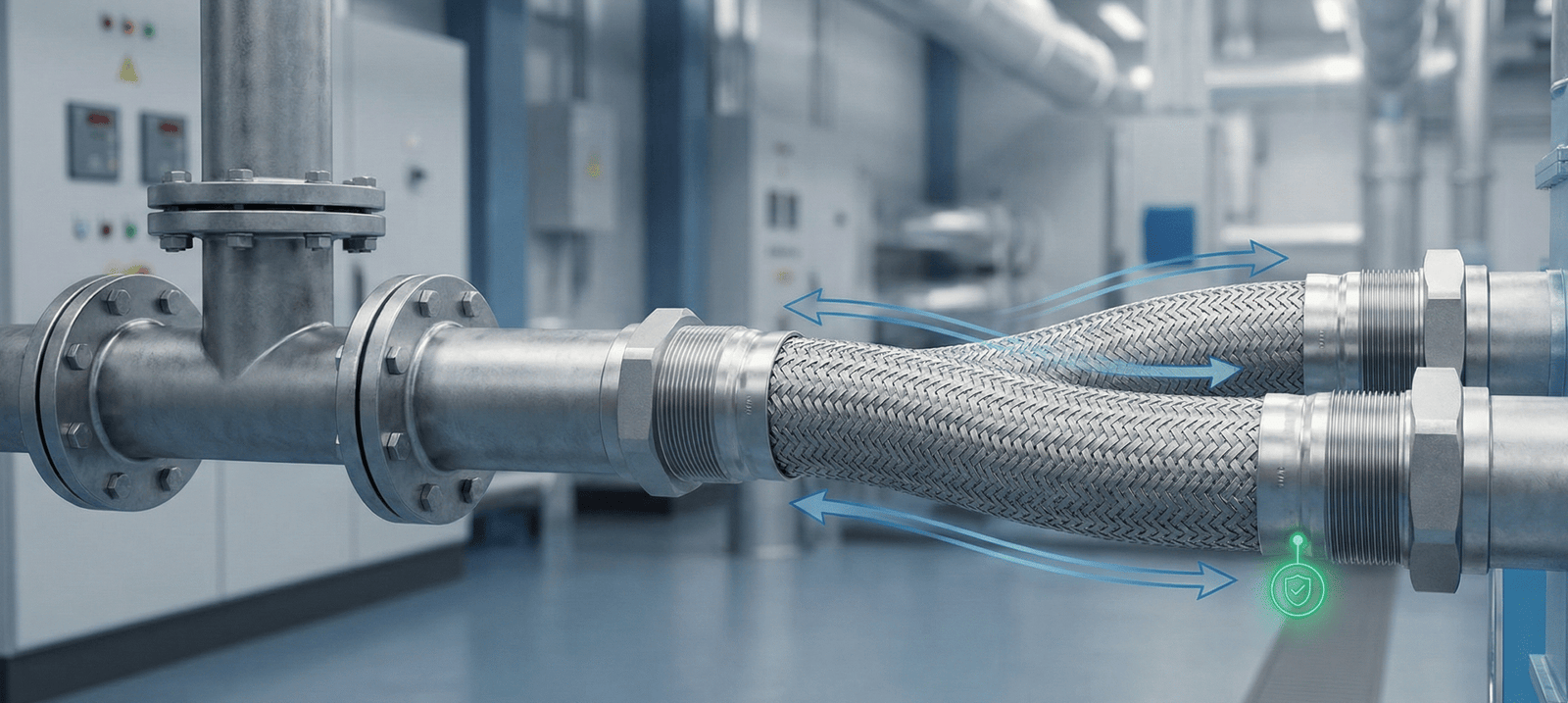
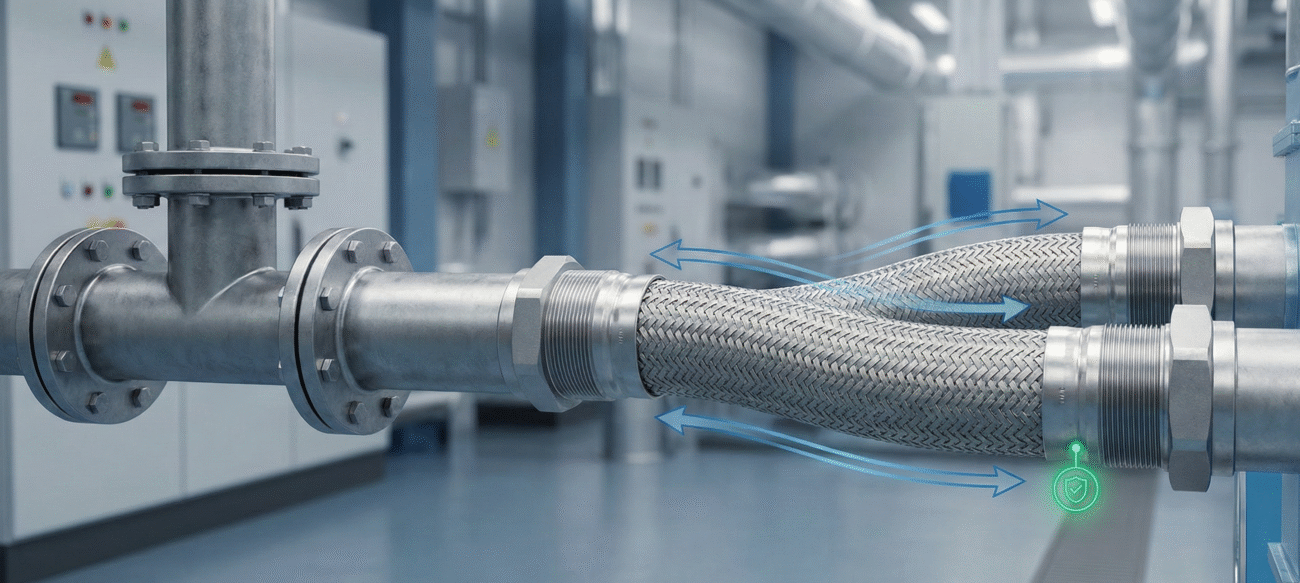
The typical construction includes an inner core of corrugated stainless steel tubing that provides flexibility while maintaining pressure integrity. An outer braided stainless steel sheath adds strength and protection. Brass, stainless steel, or coated fittings on each end allow for simple threaded connections to existing HVAC components.
This design allows the connector to bend, flex, and absorb vibration while maintaining a leak-free seal—capabilities that rigid piping cannot provide without complex and costly fitting arrangements.
The Limitations Driving Change from Traditional Piping
Traditional HVAC piping has served the industry for decades, but its limitations have become increasingly apparent as systems grow more sophisticated and installation timelines compress. Rigid copper or steel pipes require exact measurements and precise cutting. Any miscalculation means wasted material and time.
Connecting traditional pipes demands skilled labor—welding, brazing, or threading operations that require training and experience. These processes are time-intensive and introduce potential failure points at every joint. In commercial applications with dozens or hundreds of connections, the labor costs and installation time become substantial.
Vibration transmission is another critical weakness. HVAC equipment naturally vibrates during operation, and rigid piping transmits these vibrations throughout the building structure, causing noise complaints and potential equipment damage. Traditional solutions involved separate vibration isolators adding complexity and cost.
Thermal expansion creates stress in rigid systems. As HVAC components heat and cool, pipes expand and contract. Rigid installations must include expansion loops or joints to accommodate this movement, requiring additional space and components.
Key Advantages of Threaded Flexible Connectors
The flexibility of these connectors solves multiple problems simultaneously. Installation time drops dramatically—what might have taken a skilled plumber four hours with traditional piping can be accomplished in under an hour with threaded flexible connectors. Simply measure the approximate distance, select an appropriately sized connector, and thread it into place.
This ease of installation translates directly to labor cost savings. Projects require fewer specialized tradespeople and less overall time on site. For commercial installations or multi-unit residential buildings, these savings multiply across dozens or hundreds of connections.
Vibration isolation is inherent in the design. The flexible construction absorbs vibrations from pumps, compressors, and air handlers, preventing transmission to the building structure. This eliminates the need for separate vibration isolators in many applications, reducing both component costs and installation complexity.
Threaded flexible connectors accommodate thermal expansion naturally. As equipment heats and cools, the flexible tubing simply flexes slightly, eliminating stress on connections. This capability extends system longevity by preventing stress-related failures at connection points.
Maintenance and future modifications become simpler as well. Threaded connections can be disconnected and reconnected without cutting pipes or making permanent alterations. Need to replace a component? Simply unscrew the flexible connectors, swap the equipment, and reconnect.
Technical Performance That Matches or Exceeds Traditional Methods
Skeptics initially questioned whether threaded flexible connectors could match the pressure ratings and longevity of traditional piping. Real-world performance has answered decisively: high-quality flexible connectors meet or exceed traditional piping specifications.
Modern threaded flexible connectors handle working pressures from 150 PSI to over 300 PSI depending on construction—more than adequate for residential and commercial HVAC applications. Temperature ratings typically span from -40°F to 250°F, covering the full range of HVAC operating conditions.
Corrosion resistance surpasses copper in many applications. Stainless steel construction provides excellent resistance to water, refrigerants, and glycol solutions commonly used in HVAC systems. Unlike copper, which can corrode in certain water chemistries or when in contact with dissimilar metals, stainless steel maintains integrity across a wide range of conditions.
Pressure drop through quality flexible connectors is minimal and comparable to smooth-bore piping of the same diameter. The corrugations are designed to maintain flow efficiency while providing flexibility, so system performance isn’t compromised.
Application Areas Seeing Rapid Adoption
Commercial HVAC installations have embraced threaded flexible connectors enthusiastically. Large office buildings, hospitals, and schools benefit from reduced installation time and the ability to easily modify systems as building uses change. The labor savings alone often justify the switch, even before considering performance benefits.
Residential applications are growing rapidly. Modern homes with complex zoned heating and cooling systems benefit from the installation simplicity. Retrofit projects particularly favor flexible connectors since they can navigate existing structures without extensive demolition or modification.
Data centers represent a specialized but growing market. These facilities require precise temperature control with minimal downtime. Threaded flexible connectors enable faster installations and easier maintenance—critical factors when every minute of downtime costs thousands of dollars.
Industrial facilities with process cooling or heating benefit from the vibration isolation and ease of modification. Manufacturing environments frequently reconfigure layouts, and flexible connectors accommodate these changes without complete piping system redesigns.
Installation Best Practices for Optimal Performance
Proper installation ensures threaded flexible connectors deliver their full benefits. Start by selecting the correct size—the connector should match the port sizes on equipment it’s connecting. Oversizing or undersizing can affect performance and may void warranties.
Avoid over-tightening threaded connections. Use appropriate thread sealant or tape rated for the system fluid and temperature. Hand-tighten plus one to one-and-a-half turns with a wrench is typically sufficient. Over-tightening can distort threads or damage sealing surfaces.
Don’t stretch connectors beyond their natural length or compress them excessively. Most manufacturers specify a maximum extension and compression ratio—typically allowing 10-15% movement in either direction from the relaxed length. Exceeding these limits can cause premature failure.
Support longer runs appropriately. While flexible, these connectors still need support to prevent sagging or kinking. Follow manufacturer spacing recommendations, typically every 3-4 feet for horizontal runs.
Avoid sharp bends or kinks. The flexibility should be distributed along the connector’s length rather than concentrated at a single point. Most products specify a minimum bend radius—respect these limits to ensure longevity.
Addressing Common Concerns and Misconceptions
Some HVAC professionals trained on traditional methods initially resist threaded flexible connectors, citing durability concerns or unfamiliarity. However, field experience over the past decade has proven these concerns largely unfounded when quality products are properly installed.
The “it’s always been done this way” mentality gradually gives way as professionals experience the installation efficiency and reliability firsthand. Many contractors now specify flexible connectors as their default choice, using traditional piping only where specific circumstances require it.
Cost comparisons sometimes favor traditional piping at the material level, but this misses the bigger picture. When labor costs, installation time, and long-term performance are factored in, threaded flexible connectors often represent the more economical choice.
The Future of HVAC Installation
As building codes evolve and construction methods advance, threaded flexible connectors align perfectly with industry trends. Prefabrication and modular construction benefit enormously from the installation speed and flexibility these connectors provide.
Smart HVAC systems with IoT sensors and controls also pair well with flexible connectors. The ease of modification allows system adjustments as buildings add sensors and optimize performance without extensive reconstruction.
Sustainability goals favor threaded flexible connectors as well. Faster installation means less energy used during construction. The longevity and leak resistance reduce refrigerant losses and improve system efficiency over time.
Making the Switch: Practical Considerations
For contractors and building owners considering the transition to threaded flexible connectors, start with smaller projects to gain familiarity. Use them for equipment replacements or small renovations before specifying them for entire new construction projects.
Select quality products from reputable manufacturers. The flexible connector market includes budget options that may not deliver the promised performance or longevity. Invest in proven products with solid warranties and track records.
Train installation teams properly. While flexible connectors are simpler to install than traditional piping, proper technique still matters. Understanding torque specifications, support requirements, and installation limits ensures optimal performance.
The shift from traditional piping to threaded flexible connectors in modern HVAC systems represents more than just a change in materials—it’s a fundamental improvement in how we approach climate control installation and maintenance. As the benefits become increasingly clear, this replacement trend will only accelerate.


