

Rooftop chillers are common in commercial and residential buildings across the UAE. They cool large spaces, but they also create vibration. If you ignore this issue, it can lead to cracks, noise complaints, and structural damage. Many property managers in Dubai and Abu Dhabi face this challenge.
This guide explains how to stop floor vibrations from rooftop chillers using practical engineering steps.
Why Rooftop Chillers Cause Floor Vibrations
Rooftop chillers contain compressors, pumps, and rotating parts. These parts generate mechanical vibration. The vibration travels through the steel frame and concrete slab. It then spreads into walls, ceilings, and occupied areas.
Common problems include:
• Low frequency humming noise
• Cracks in ceilings and walls
• Disturbance in offices and apartments
• Equipment performance issues
If you manage a high rise building in the UAE, you must treat vibration control as a priority.
Step 1: Conduct a Vibration Assessment
Start with a professional vibration survey. Measure amplitude and frequency levels. Identify whether the vibration comes from compressors, fans, or poor installation.
Engineers use vibration meters to record data. This step helps you choose the right isolation method.
Step 2: Check Structural Design
Many vibration problems occur because the slab is too thin or lacks proper reinforcement. Review structural drawings. Confirm load capacity and stiffness.
If the slab is flexible, vibration will amplify. Structural strengthening may be required in older buildings.
Step 3: Install Proper Vibration Isolators
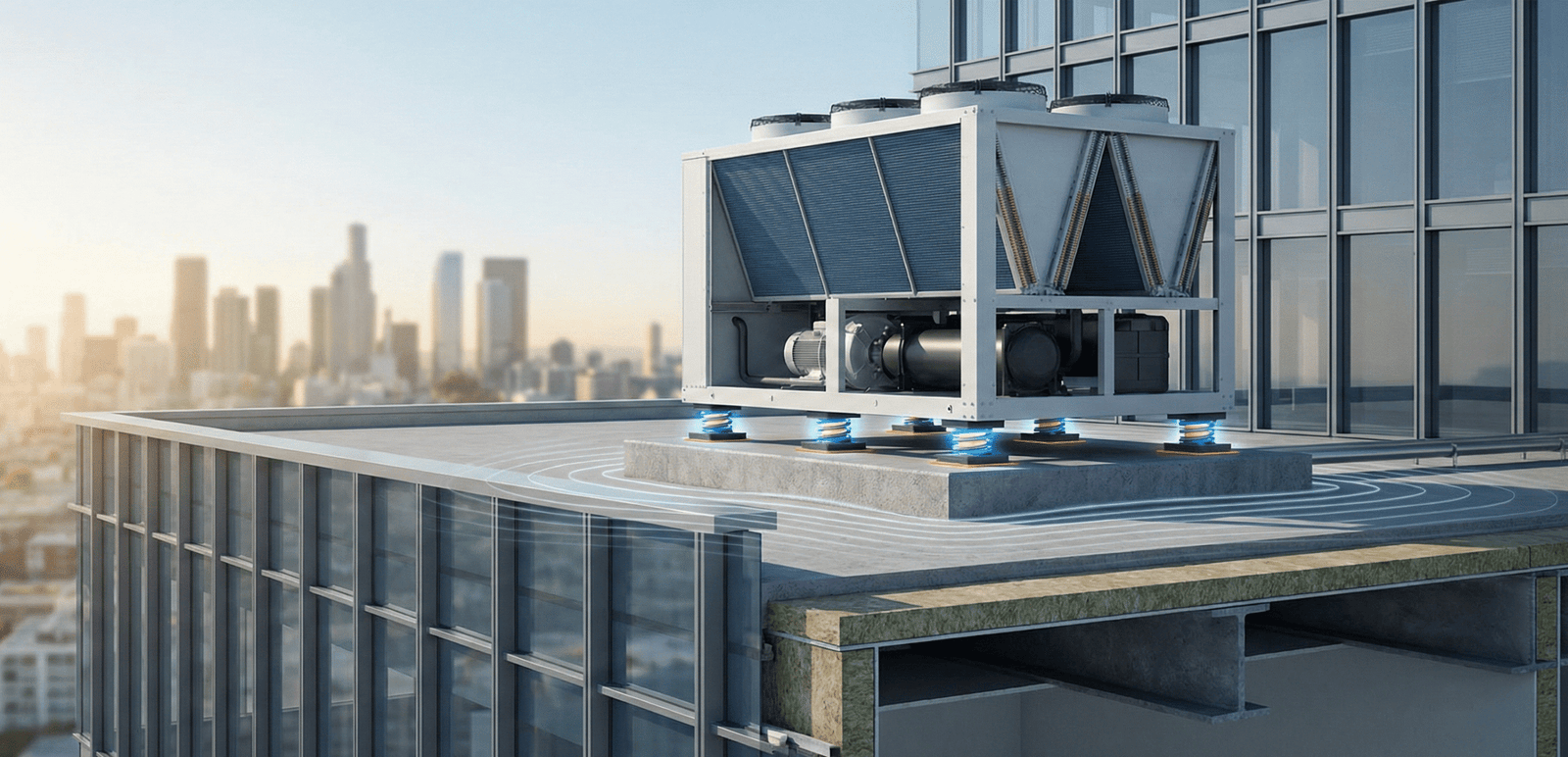
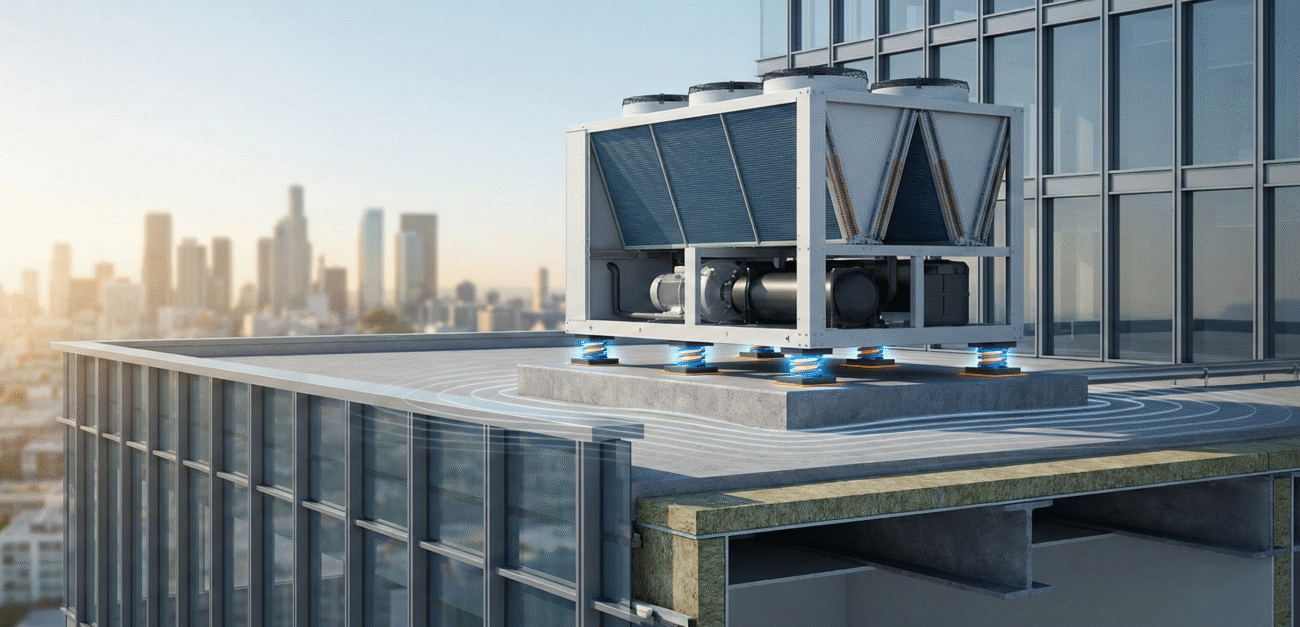
This step is critical. Use spring isolators or rubber mounts under the chiller base. Select isolators based on equipment weight and operating frequency.
Properly designed Vibration Isolation and Acoustic Solutions reduce vibration transmission significantly. Always ensure correct deflection and load distribution.
Step 4: Use Inertia Bases
An inertia base adds mass under the chiller. It reduces movement and stabilizes the system. Contractors often combine inertia bases with spring isolators for better results.
This method works well in UAE commercial towers where rooftop chillers operate continuously.
Step 5: Install Flexible Connections
Rigid piping transmits vibration directly into the building. Install flexible connectors in chilled water pipes and electrical conduits.
Flexible joints absorb movement and prevent vibration from spreading.
Step 6: Ensure Proper Maintenance
Loose bolts and worn bearings increase vibration. Schedule regular inspections. Replace damaged components immediately.
Preventive maintenance protects both the equipment and the building structure.
UAE Building Considerations
The UAE climate forces chillers to run for long hours. High temperatures increase system load. As a result, vibration levels may rise.
Local regulations also require noise control in residential areas. Building owners must comply with municipal standards in Dubai and Abu Dhabi.
Working with experienced specialists such as Vibro Isolation Limited ensures compliance and long term performance.
Rooftop chiller vibration is not just a comfort issue. It affects safety, equipment lifespan, and property value. A systematic approach solves the problem effectively.
Invest in proper assessment, correct isolators, and routine maintenance. This ensures a quiet and stable building environment.
Frequently Asked Questions
What causes floor vibration from rooftop chillers?
Mechanical components such as compressors and fans create vibration that travels through the structure.
Can vibration damage a building?
Yes. Long term vibration can cause cracks and structural fatigue.
Are spring isolators better than rubber pads?
Spring isolators perform better for low frequency vibration.
Do UAE regulations require vibration control?
Yes. Local authorities enforce noise and building safety standards.
How often should chillers be inspected?
At least twice a year, or as recommended by the manufacturer.


