

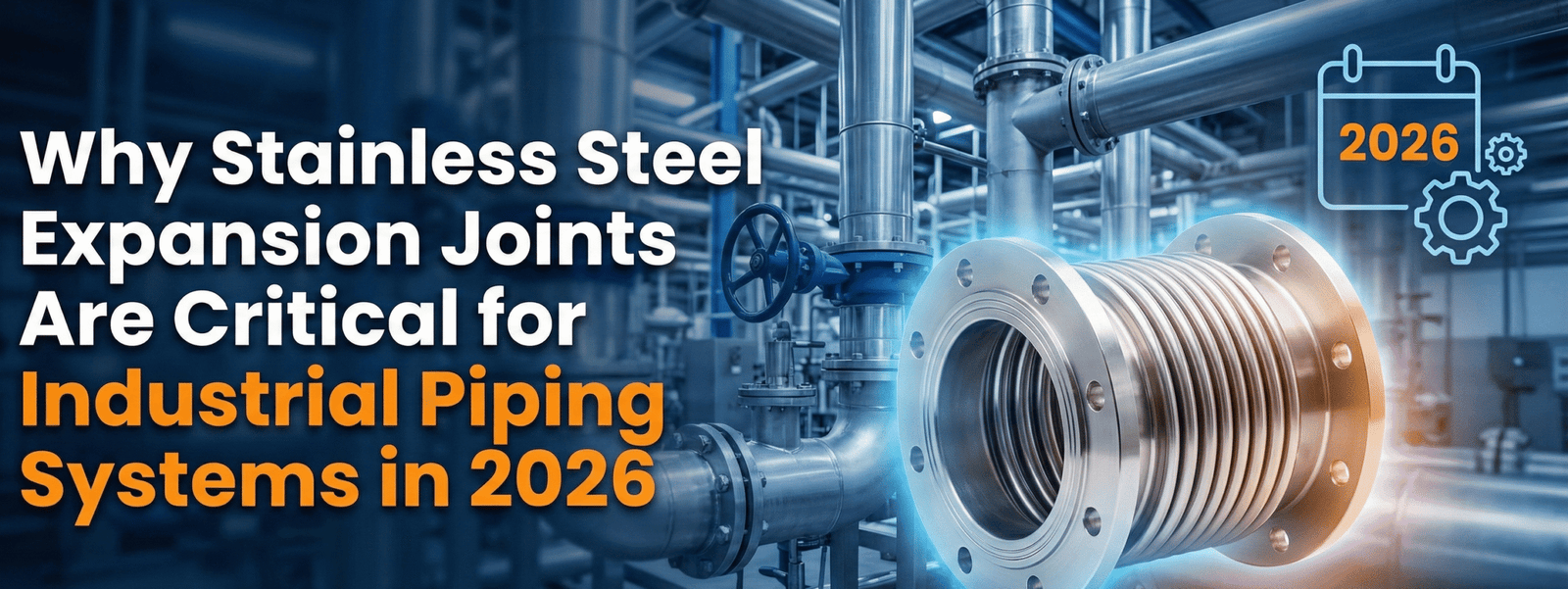
Industrial facilities are facing unprecedented challenges in 2026, from stricter environmental regulations to demands for greater operational efficiency. At the heart of these evolving requirements lies a component that many overlook until problems arise: stainless steel expansion joints. These essential devices are becoming increasingly critical for modern industrial piping systems, and understanding why can save your facility from costly downtime and safety hazards.
Understanding Stainless Steel Expansion Joints and Their Purpose
Stainless steel expansion joints are flexible connectors designed to absorb thermal expansion, vibration, and movement in piping systems. When pipes heat up or cool down, they naturally expand and contract. Without proper expansion joints, this movement creates enormous stress on the piping system, leading to cracks, leaks, and potentially catastrophic failures.
Unlike their rubber or fabric counterparts, stainless steel expansion joints offer superior durability and performance in extreme conditions. They’re engineered with metal bellows that compress and extend, accommodating movement while maintaining system integrity. In industrial environments where temperatures can soar above 1000°F or plunge below freezing, stainless steel proves its worth time and again.
Why 2026 Is a Turning Point for Expansion Joint Technology
The industrial landscape of 2026 presents unique challenges that make stainless steel expansion joints more critical than ever. New environmental regulations require tighter emission controls, meaning piping systems must maintain perfect seals even under stress. Traditional expansion methods simply can’t meet these stringent requirements.
Additionally, industries are pushing equipment to work harder and longer. Chemical plants, refineries, power generation facilities, and manufacturing operations are all increasing production demands. This intensified use creates more thermal cycling, vibration, and pressure fluctuations—exactly the conditions where stainless steel expansion joints excel.
The shift toward Industry 4.0 and predictive maintenance also plays a role. Modern stainless steel expansion joints can be equipped with sensors that monitor performance in real-time, alerting maintenance teams to potential issues before they become emergencies. This integration with smart systems makes them indispensable for forward-thinking facilities.
Key Benefits That Set Stainless Steel Apart
The advantages of choosing stainless steel expansion joints over alternative materials are significant and measurable. First, their corrosion resistance is unmatched, especially in applications involving aggressive chemicals, saltwater, or acidic environments. A stainless steel unit can last 15-20 years or more with proper maintenance, while rubber alternatives might need replacement every 3-5 years.
Temperature tolerance is another crucial factor. Stainless steel expansion joints handle extreme heat that would destroy rubber or fabric options within hours. They’re equally capable in cryogenic applications, maintaining flexibility and seal integrity at temperatures approaching absolute zero.
Pressure handling capability gives stainless steel expansion joints another edge. Modern designs can withstand pressures exceeding 1000 PSI while still accommodating significant movement. This combination of strength and flexibility is nearly impossible to achieve with other materials.
Critical Applications Across Industries
In petroleum refineries, stainless steel expansion joints protect pipelines carrying crude oil and refined products through extreme temperature variations. The thermal cycling that occurs during different processing stages would destroy rigid piping within months without proper expansion accommodation.
Chemical processing plants rely on these components to handle corrosive materials safely. Whether transporting acids, bases, or reactive compounds, stainless steel expansion joints maintain their integrity where other materials would deteriorate rapidly.
Power generation facilities, both conventional and renewable, use expansion joints extensively. Steam lines in coal or gas plants experience dramatic temperature swings, while concentrated solar facilities face similar challenges. Even hydrogen production facilities, growing rapidly in 2026, depend on stainless steel expansion joints for safe operation.
HVAC systems in large commercial and industrial buildings increasingly specify stainless steel expansion joints for their superior longevity and reduced maintenance requirements compared to rubber alternatives.
Selection Criteria for Optimal Performance
Choosing the right stainless steel expansion joints requires careful consideration of several factors. Temperature range is paramount—you need to know both the maximum operating temperature and potential temperature differentials your system will experience.
Pressure ratings must account not just for normal operating pressure but also potential pressure spikes during startup, shutdown, or emergency conditions. A 20-30% safety margin above maximum expected pressure is standard practice.
Movement capability includes three types: axial compression and extension, lateral deflection, and angular rotation. Most systems experience some combination of all three, so understanding your specific movement requirements is essential.
Material grade selection matters significantly. While 304 stainless steel works for many applications, corrosive environments may require 316 or even specialty alloys like Inconel or Hastelloy. The additional cost of premium materials pays for itself through extended service life and reduced failure risk.
Installation and Maintenance Best Practices
Proper installation is crucial for expansion joint performance. The piping system must be correctly anchored and guided to ensure movement occurs where the expansion joint expects it. Misaligned anchors or inadequate guides can cause premature failure even in high-quality units.
Pre-installation inspection should verify that the expansion joint matches specifications and shows no shipping damage. Check bellows for dents, scratches, or other defects that could become failure points under pressure.
Regular maintenance inspections should occur at intervals based on operating severity—quarterly for harsh conditions, annually for moderate service. Look for signs of corrosion, bellows fatigue, or unusual wear patterns. Many facilities now use thermal imaging and ultrasonic testing to detect problems before they’re visible.
The Cost-Benefit Analysis That Matters
While stainless steel expansion joints carry higher upfront costs than alternatives, the total cost of ownership tells a different story. Consider a medium-sized chemical plant that replaces ten rubber expansion joints annually at $500 each, plus 40 hours of labor and production downtime. That’s $15,000 in direct costs, plus potentially hundreds of thousands in lost production.
Switching to stainless steel expansion joints at $2,000 each represents a $20,000 investment, but with a 15-year service life and minimal maintenance, the annual cost drops to roughly $1,300—a savings of $13,700 per year, not counting reduced downtime and improved safety.
Looking Ahead: The Future of Industrial Piping
As we progress through 2026 and beyond, stainless steel expansion joints will become even more sophisticated. Smart monitoring integration, advanced materials, and improved manufacturing techniques will enhance performance and reliability. Facilities that invest in quality expansion joints today are positioning themselves for success in an increasingly demanding industrial environment.


