

Generators are essential in residential buildings across the Middle East. Power backup ensures comfort and safety. However, generator vibration can disturb residents and damage structures.
Property managers must address this issue early.
Why Generator Vibration Is a Problem?
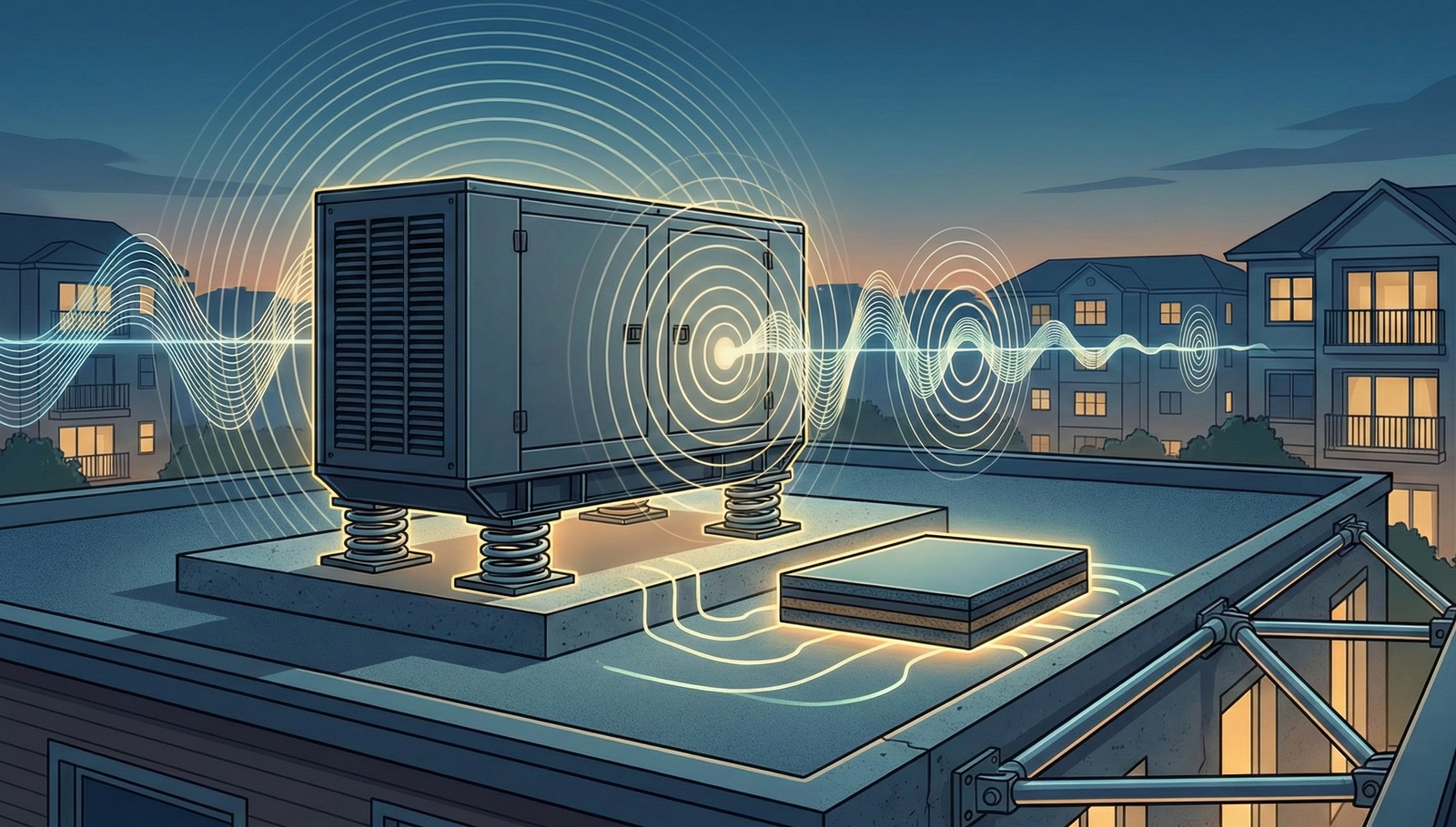
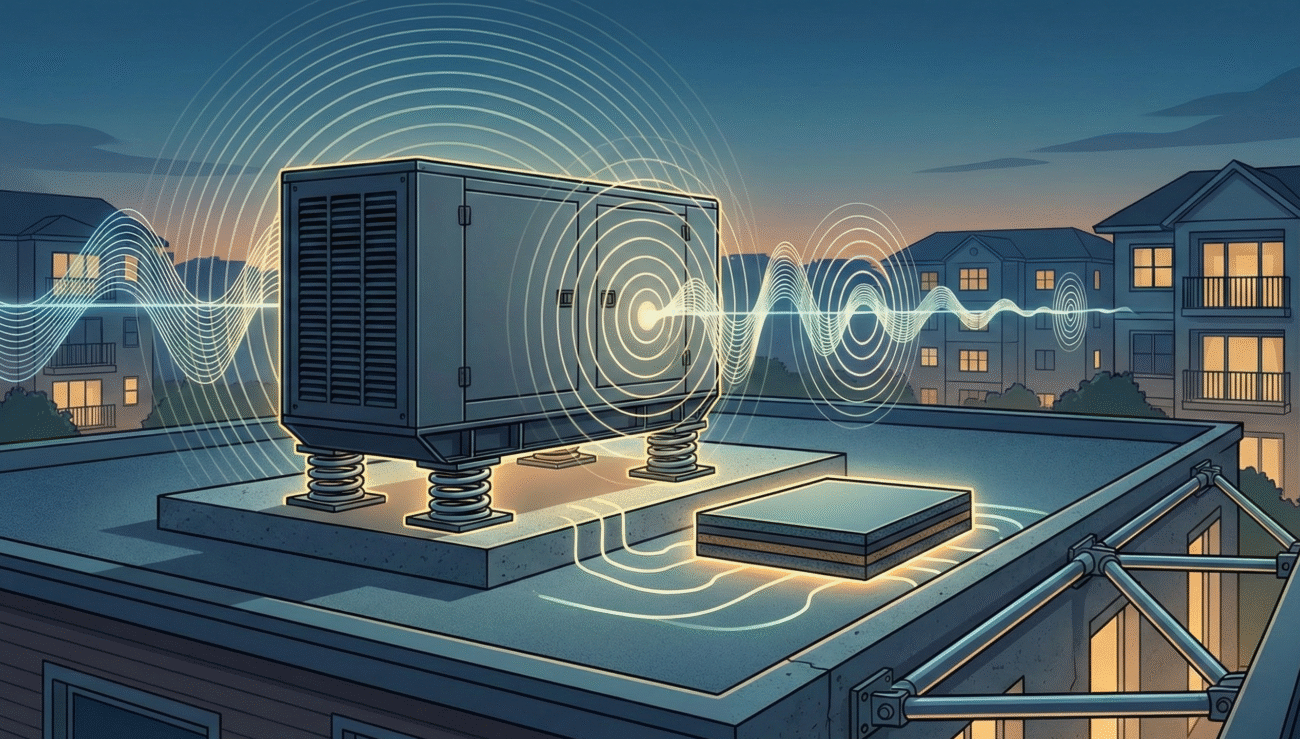
Generators contain rotating engines and alternators. These components produce continuous vibration during operation. The vibration travels through the base frame into the building structure.
Common issues include:
• Loud humming noise
• Structural cracks
• Complaints from residents
• Reduced equipment life
Solution 1: Install Spring Vibration Isolators
Spring isolators reduce vibration transmission significantly. They work well for low frequency engine vibration.
Select isolators based on generator weight and speed. Proper installation ensures even load distribution.
High quality Vibration Isolation and Acoustic Solutions help reduce both structure borne noise and airborne noise.
Solution 2: Use Inertia Bases
An inertia base adds extra mass below the generator. This stabilizes the equipment and reduces movement.
Contractors often combine inertia bases with spring mounts for better results. This method works well in high rise residential buildings.
Solution 3: Flexible Pipe and Exhaust Connections
Rigid fuel lines and exhaust pipes transmit vibration directly into walls and ceilings. Flexible connectors absorb movement.
Install flexible exhaust bellows and anti vibration pipe connectors. This prevents vibration transfer into the structure.
Additional Best Practices
• Place generators on ground floors where possible
• Ensure proper alignment during installation
• Conduct regular maintenance checks
• Tighten bolts and inspect engine mounts
Ignoring vibration leads to higher repair costs later.
Professional companies such as Vibro Isolation Limited provide engineered solutions tailored to residential buildings.
Conclusion
Generator vibration affects comfort, safety, and building durability. Effective isolation systems solve the problem.
Invest in engineered Vibration Isolation and Acoustic Solutions to protect residents and property value.
Frequently Asked Questions
Why does my building shake when the generator runs?
The engine creates vibration that travels through the structure.
Are rubber pads enough for generators?
Rubber pads work for small units, but spring isolators perform better for large systems.
Can vibration damage walls?
Yes. Long term vibration can cause cracks.
How often should generators be inspected?
Follow manufacturer guidelines, usually every three to six months.
Is professional installation necessary?
Yes. Proper load calculation and alignment are essential.


