
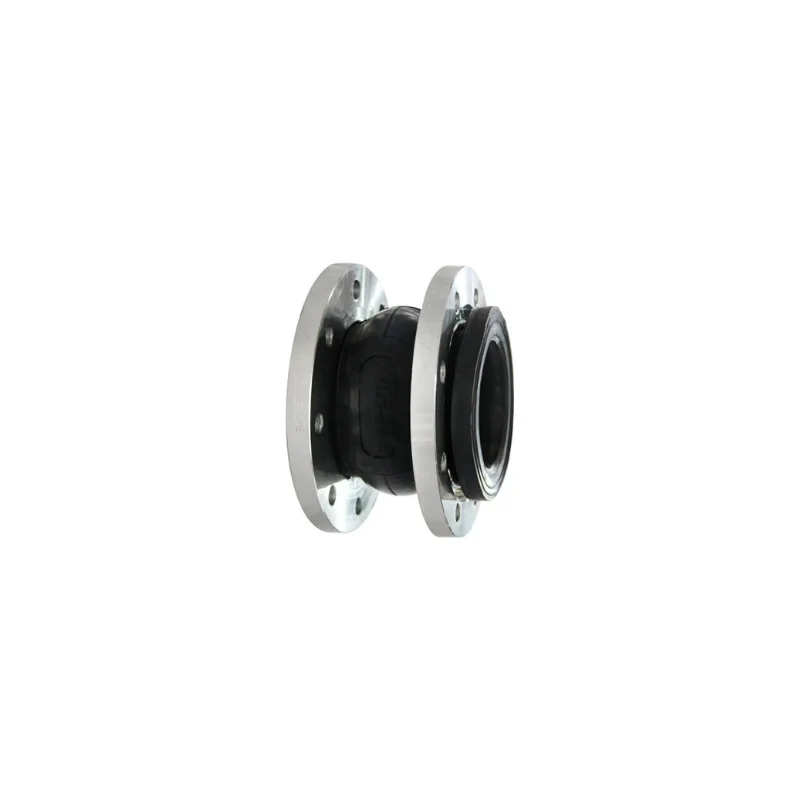


Description
How Rubber Flexible Connectors Handle Duct Movement
Metal ductwork expands, contracts, and vibrates every time equipment cycles on and off. Left rigid, those joints crack over time. Rubber Flexible Connectors sit between rigid sections and vibrating equipment, absorbing that movement so the surrounding ductwork isn't taking the strain directly.
The rubber itself does double duty — it flexes with thermal movement and dampens the vibration that would otherwise travel straight into the duct run and, eventually, into occupied space below or beside it.
Where Rubber Connectors Fit Best
Fan housings, AHU inlets, and rooftop unit transitions are the usual spots. Rubber Flexible Connectors handle moderate temperature ranges well, though they're not the right pick for high-heat exhaust applications — that's where a stainless steel option usually takes over. Installers should check the rated temperature range against the actual duct application before assuming rubber will hold up long-term.
FAQ
How long do rubber connectors typically last?
Lifespan depends heavily on temperature exposure and UV if installed outdoors; indoor, moderate-temperature applications tend to last considerably longer.
Can rubber connectors be used on rooftop units in direct sun?
Only if the material is UV-stabilized — standard rubber compounds degrade faster under constant sun exposure.
What's the difference between rubber and braided connectors?
Rubber suits general vibration and thermal movement; braided stainless options are typically used where higher temperatures or pressure ratings are involved.
- Chemical & Thermal Resistance: Excellent resistance to heat, acids, alkalis, oils, and corrosive media—making them suitable for aggressive operating conditions
- Vibration & Noise Isolation: Effectively dampens mechanical vibration and reduces pressure pulsations and noise transmission throughout the piping system
- Elasticity & Sealing Integrity: Offers high elasticity, superior air tightness, and reliable sealing performance under varying pressure and vacuum conditions
- Movement Absorption: Accommodates axial, lateral, and angular displacements caused by thermal expansion, equipment motion, or installation misalignment
Choosing the correct VRSF flexible expansion joint requires careful consideration of the following parameters:
- Compatibility between the conveyed medium and selected rubber material
- Full operating range of temperature, pressure, and vacuum
- Required movement (axial, lateral, angular) based on system dynamics
- Dimensional spacing between pipe flanges and connection type
With this information, our engineering team can assist in identifying the optimal expansion joint configuration to meet your specific application requirements
- Noise & Vibration Isolation: Effectively dampens vibration and reduces noise transmission from pumps, fans, and mechanical equipment into the piping network
- Flexible Installation: Compact and lightweight design with flanged ends allows for quick, secure installation and easy alignment
- Corrosion Resistance: The seamless rubber body resists degradation from high temperatures, aggressive media, and oil-based fluids—protecting internal surfaces and extending service life
- Multi-Directional Movement Compensation: Accommodates axial, lateral, and angular displacements caused by thermal expansion, vibration, or misalignment—without being restricted by flange neutrality
- Pressure & Vacuum Tolerance: Engineered to withstand high internal pressures and vacuum conditions while maintaining structural integrity
- Material Compatibility Guidance: Proper selection requires understanding media compatibility, operating temperature and pressure ranges, vacuum conditions, movement requirements, and flange dimensions. Our engineering team is available to assist in determining the optimal connector for each application
VRSF flexible expansion joints are extensively utilized across a wide range of infrastructure and industrial sectors due to their exceptional versatility, durability, and media compatibility. Their ability to absorb movement, isolate vibration, and resist aggressive operating conditions makes them an essential component in both utility and process piping systems.
- Chemical Processing Plants
- Construction and Civil Infrastructure
- Water Supply and Drainage Networks
- Petroleum and Refining Systems
- Light and Heavy Industrial Installations
- Refrigeration and HVAC Systems
- Sanitation and Water Heating Applications
- Fire Protection Networks
- Power Generation Facilities
Depending on the selected rubber compound—such as NR, SBR, IIR, NBR, EPDM, CR, or FKM—VRSF expansion joints can be tailored to meet specific performance requirements, including:
- Acid and alkali resistance
- Corrosion and oil resistance
- High temperature and radiation tolerance
- Wear and aging resistance
- This adaptability allows the joints to perform reliably across a wide spectrum of media and environmental conditions.
Typical System Applications:
- Water Supply & Drainage Systems
- HVAC Installations
- Fire Protection Networks
- Pump and Compressor Connections
- Pharmaceutical and Paper Processing
- Marine and Shipboard Piping
- Fans, Blowers, and Air Handling Units
Their capacity to accommodate significant displacement, withstand harsh media exposure, and streamline installation makes VRSF flexible expansion joints a trusted solution for engineers and contractors seeking robust performance in dynamic piping environments.


