



Description
Inertia Bases In UAE for Rotating Equipment
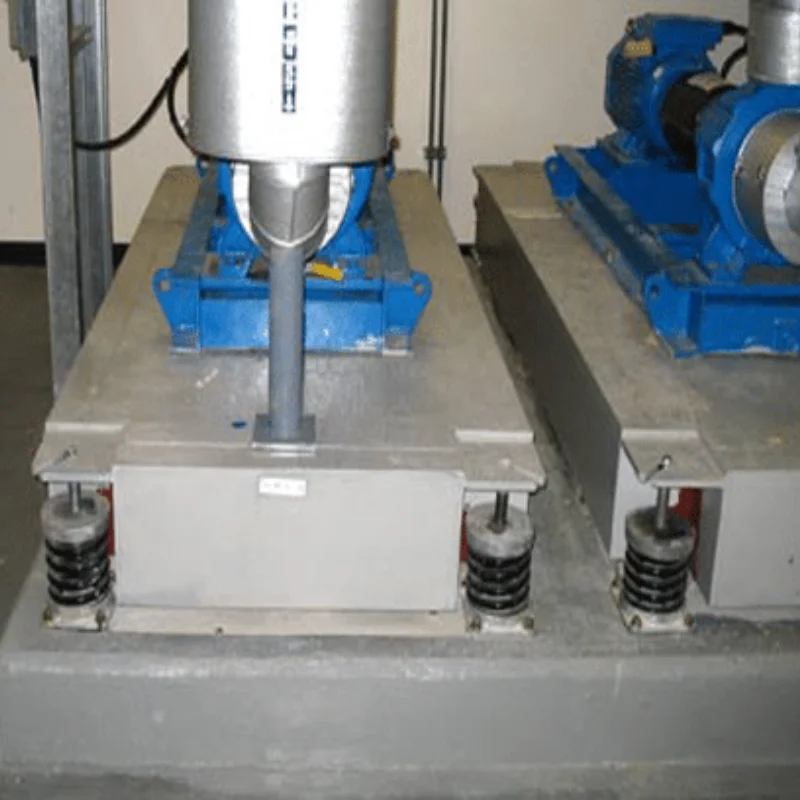
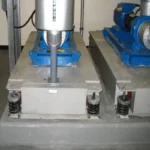
Light equipment on a light mount tends to wobble before it settles. Add mass underneath, and the whole system behaves differently — it resists movement instead of transmitting it. Inertia Bases In UAE installations pair a concrete or steel-filled base with spring or rubber isolators, giving pumps, chillers, and fans a stable platform heavy enough to stay put under load.
The base isn't just dead weight, either. It lowers the equipment's center of gravity and smooths out the small torque reactions that happen every time a motor starts or a fan changes speed, which matters more on larger rotating equipment than on small units.
Sizing an Inertia Base Correctly
Getting the mass-to-load ratio right is the part installers most often get wrong. Too light, and the base won't do its job; too heavy, and it adds unnecessary structural load to the floor beneath it. Inertia Bases In UAE projects generally follow a ratio tied to equipment weight and RPM, which is why off-the-shelf sizing rarely fits every job the same way.
FAQ
Are inertia bases only for large equipment?
They're most common on larger rotating machinery, but smaller high-vibration units can benefit too if floor-borne noise is a persistent issue.
Concrete or steel-filled — which is better?
Concrete-filled bases are common and cost-effective; steel-filled options suit tighter spaces where a slimmer profile matters more than raw mass.
Do inertia bases need reinforcement in the floor slab below?
Sometimes, depending on total weight — this is worth checking with a structural engineer before installation on upper floors.
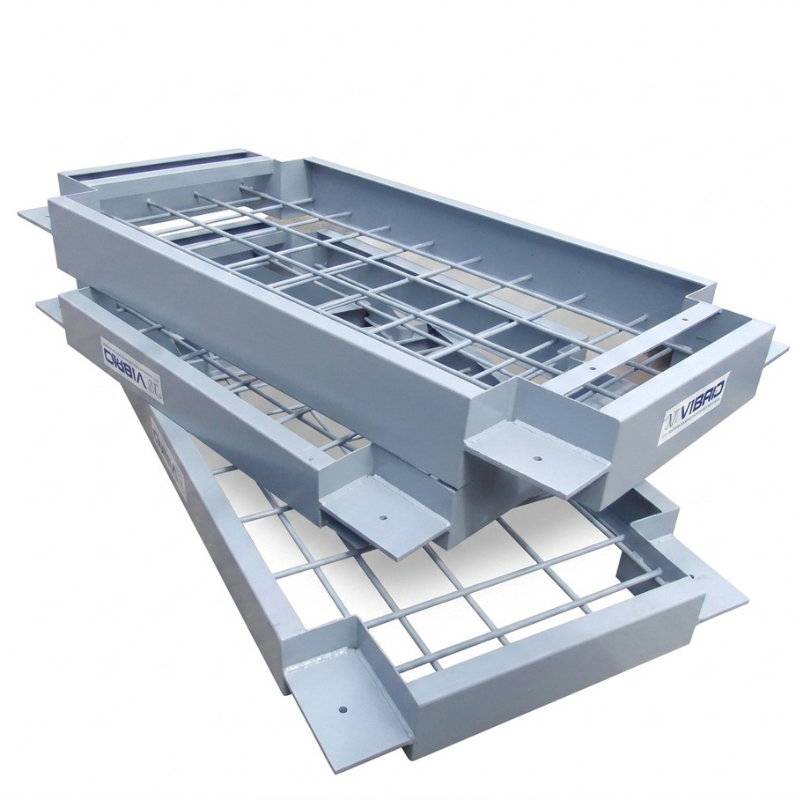
frames are offered in thicknesses ranging from 150 mm (6″) to 350 mm (14″). Each unit includes integrated isolator brackets, a steel channel perimeter for concrete pouring, 13 mm (½”) reinforcing rods spaced at 203 mm (8″) intervals in both directions, and pre-positioned steel anchor bolts. Frames are delivered to site fully welded and ready for concrete filling, significantly reducing on-site labor and installation time ensuring optimal cost-efficiency.
VIBRO BASE inertia base frames are purpose-engineered to accept poured concrete, forming a reinforced foundation for mechanical equipment that demands a concrete-filled inertia base. These bases serve a wide range of functions: they support mechanical systems, minimize vibration transmission, provide secure mounting for vibration isolators, and prevent misalignment between connected components. Additionally, they help stabilize equipment by lowering its center of gravity, reduce movement during start-up and shut-down cycles, absorb reaction forces from operational loads, and act as an effective barrier to airborne noise.
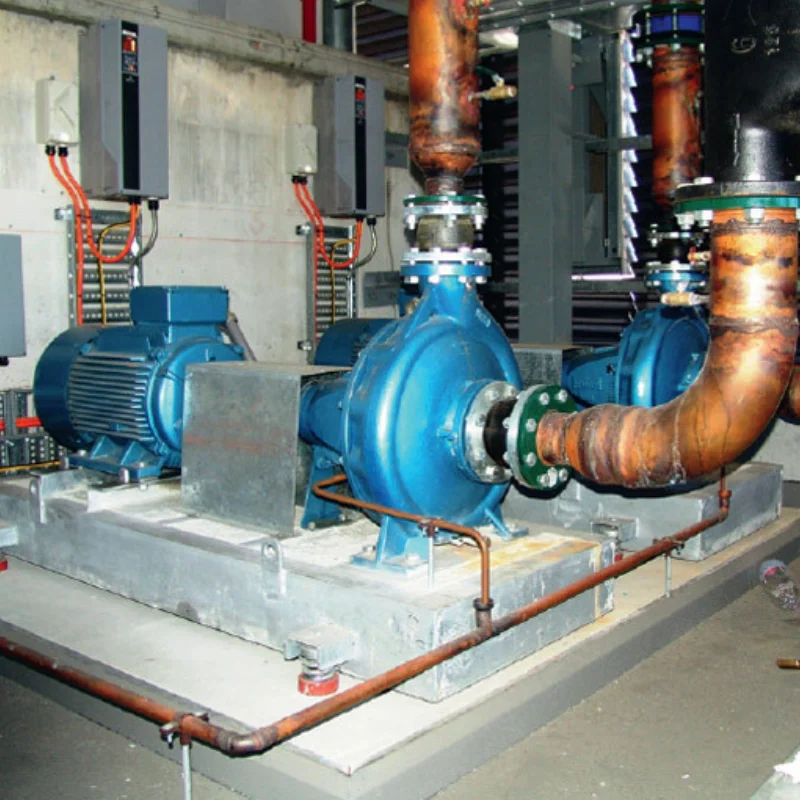
Typical applications for VIBRO BASE inertia base frames—when filled with concrete and supported by VIBRO ISOLATORS—include open-type centrifugal chillers, reciprocating air and refrigeration compressors, chillers and heat pumps, close-coupled and base-mounted pumps, centrifugal fans, internal combustion engines, and other vibration-sensitive equipment.
Isolation bases shall consist of concrete cast into precision-fabricated inertia base frames, with steel components designed and provided by the isolator manufacturer. The concrete is to be poured into a fully welded steel frame that includes pre-positioned anchor bolts for equipment mounting, 13 mm (½”) diameter reinforcing bars spaced at nominal 203 mm (8″) intervals in both directions, and recessed isolator brackets to minimize equipment mounting height and reduce the overall footprint of the base.
The base thickness shall be no less than 8% of the longest span between isolators, with a minimum of 152 mm (6″), or as otherwise specified in the project drawings. For pump installations, inertia bases must be dimensioned to accommodate piping elbows, or supplemented with additional support using VIBRO ISOLATORS where required.