
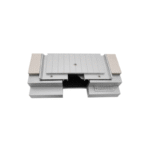
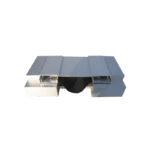
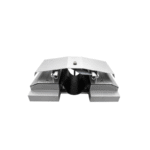
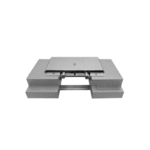
Description
- Fire Stop Middle East – Firestop materials and systems dealer (e.g., Aeroseal), including solutions for joints and fire barriers.
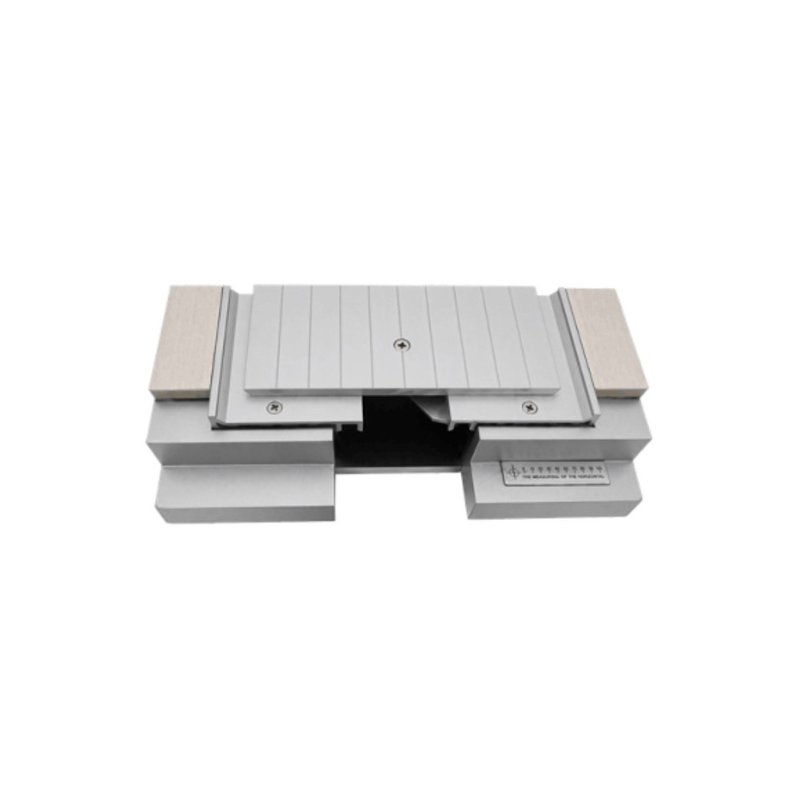
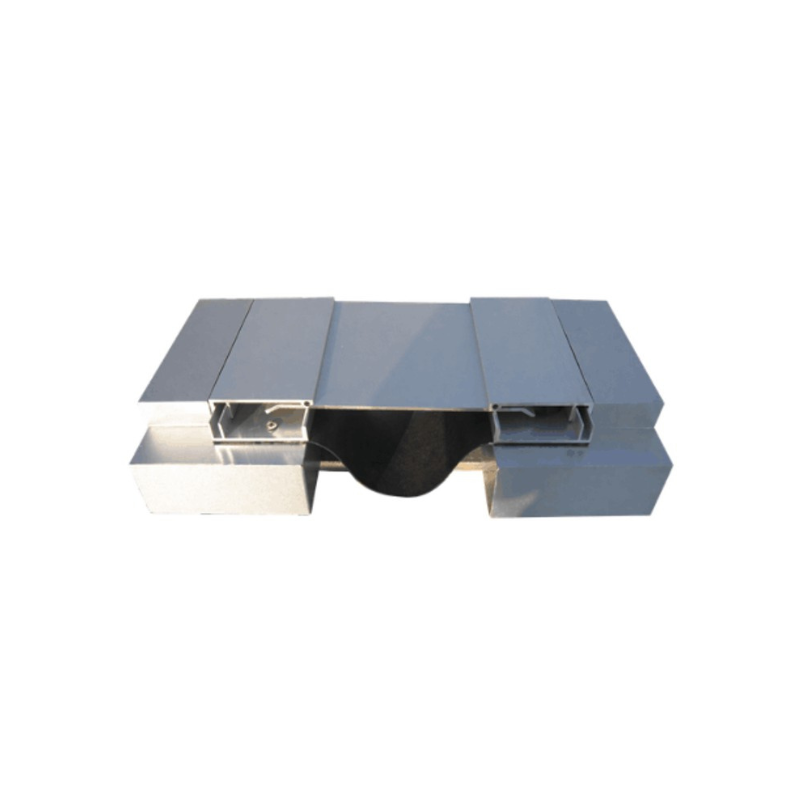
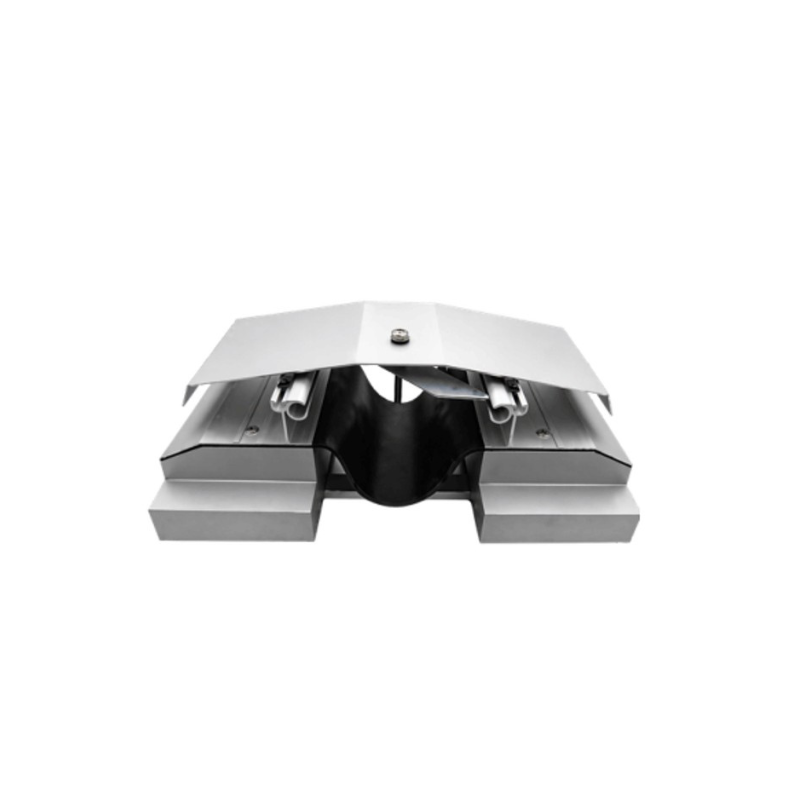
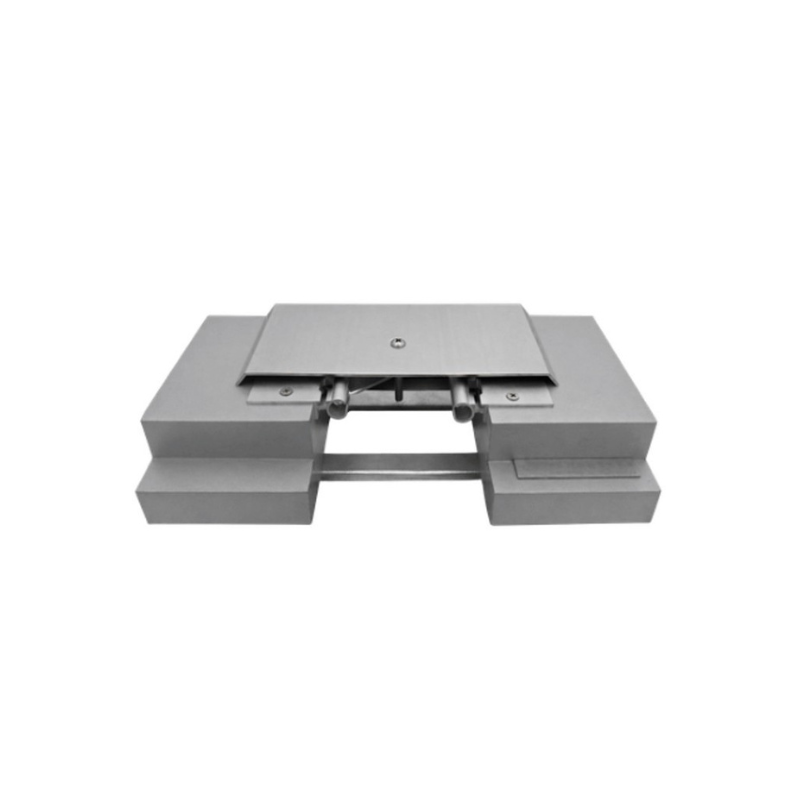
The fire barrier system is a passive fire protection assembly specifically engineered to maintain fire compartmentation continuity at building expansion joints while allowing structural movement.
1.1 Main Components
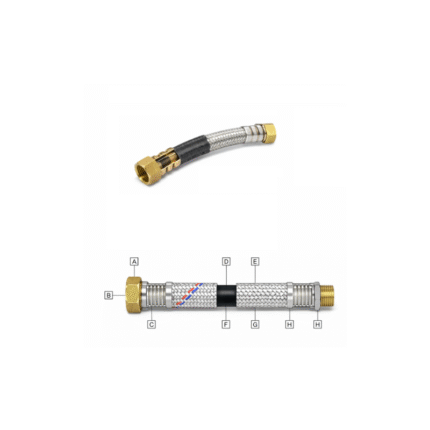
- Outer Encapsulation
- Multi-layer stainless steel foil
- Provides:
- Mechanical integrity
- Abrasion resistance
- Long-term durability
- Core Insulation
- Aluminium silicate fiber blanket
- High-temperature resistant (≈1,200°C+)
- Non-combustible and non-toxic
- Fixing & Support
- Mechanical anchoring to concrete substrates
- Designed to work in conjunction with architectural expansion joint covers
1.2 Fire Performance
- Tested to:
- ASTM E119 – Fire resistance of building assemblies
- ASTM E1966 – Fire test for joint fire barriers
- Certified fire endurance:
- 2 hours
- 3 hours
- 4 hours
- Maintains integrity during:
- Fire exposure
- Joint movement
- Thermal expansion and contraction
Expansion joints represent intentional discontinuities in slabs and walls. Without protection, these joints become fire spread paths.
The system works by:
- Expanding and flexing with slab or wall movement.
- Resisting flame penetration during fire exposure.
- Limiting heat transfer to adjacent fire compartments.
- Remaining intact even when joint gaps widen under fire conditions.
3.1 Mandatory Use Cases
fire barriers are required when ALL of the following conditions exist:
Condition | Requirement |
Structural expansion joint |
|
Fire-rated wall or floor |
|
Joint crosses fire compartment |
|
Building regulated under Fire & Life Safety Code |
|

3.2 Typical Applications
- Floor-to-floor expansion joints
- Wall-to-wall expansion joints
- Floor-to-wall junctions
- Podium to tower interface
- Seismic separation joints
3.3 Building Types
- High-rise residential towers
- Commercial offices
- Hospitals & healthcare facilities
- Hotels & hospitality projects
- Airports & transport terminals
- Data centers
- Industrial facilities with fire zoning
4.1 Technical Benefits
- Maintains fire rating continuity across movement joints
- Compatible with large movement ranges
- Performs under dynamic and seismic conditions
- High resistance to aging, moisture, and corrosion
- Does not rely on intumescent reaction alone (stable fire behavior)
4.2 Construction & Lifecycle Benefits
- Long service life (typically equal to building life)
- Low maintenance requirement
- Can be installed early (before architectural finishes)
- Works with most proprietary expansion joint cover systems
4.3 Compliance Benefits
- Helps achieve:
- Fire compartmentation strategy
- Civil Defence approvals
- Insurance compliance
- International consultant specifications (NFPA / ASTM aligned)
5.1 How Often It Is Required
The frequency depends on building size and structural design:
Project Type | Typical Quantity |
Mid-rise building | 1–3 major expansion joints |
High-rise tower | 3–8 vertical & horizontal joints |
Podium + tower | Mandatory at podium interface |
Large footprint mall | Multiple joints every 30–45 m |
Infrastructure projects | At all movement joints |
Rule of thumb:
Wherever there is an expansion joint crossing a fire-rated assembly, a fire barrier system is mandatory.
6.1 Regulatory Framework
In the UAE, MSFB-type systems are governed by:
- UAE Fire and Life Safety Code of Practice
- UAE Civil Defence (DCD / ADCD / ICD) approval process
- Consultant-driven international standards (ASTM, UL, EN)
6.2 Key UAE Requirements
- Fire resistance rating must match the adjacent wall/floor rating
- Fire barrier must be:
- Tested for movement capability
- Certified for joint width
- Installation must be:
- As per manufacturer tested configuration
- Verified by approved fire protection contractor
- Required documentation:
- Test reports (ASTM E119 / E1966)
- Product datasheets
- Method statement
- Installation inspection records
6.3 Market Practice in UAE
- Fire barriers for expansion joints are not optional
- Consultants increasingly specify:
- Pre-engineered fire barrier systems
- Instead of site-made mineral wool solutions
- Strong preference for:
- Long-life, non-intumescent systems
- Products compatible with architectural joint covers
Strengths
- High fire rating (up to 4 hours)
- Suitable for large joint widths
- Robust metallic encapsulation
- Compatible with premium joint cover systems
Considerations
- Higher initial cost compared to simple firestop sealants
- Requires trained installation
- Must be coordinated early with structural and architectural teams
Conclusion
The fire barrier system represents a mature, high-performance solution for protecting expansion joints in modern UAE construction projects. Its use is mandatory by regulation wherever fire compartmentation is interrupted by structural movement joints.
Given:
- Increasing building heights
- Stricter Civil Defence enforcement
- Preference for tested and certified systems
Demand for MSFB-type fire barrier systems is expected to grow steadily in the UAE market, especially in high-rise, mixed-use, and infrastructure developments.


