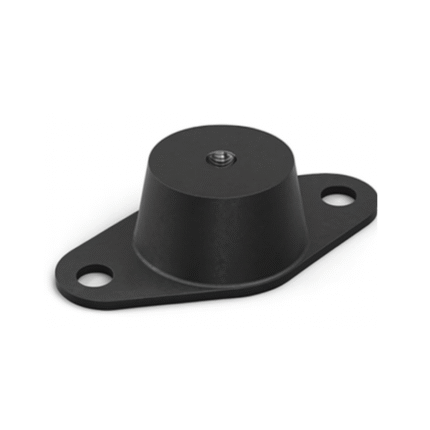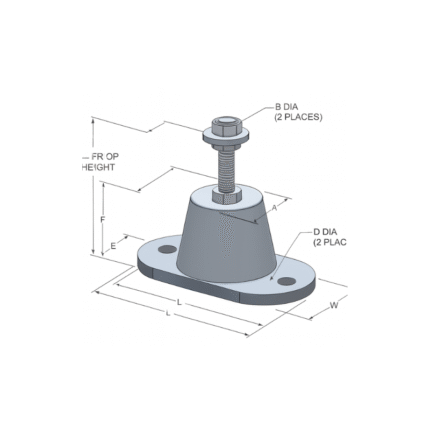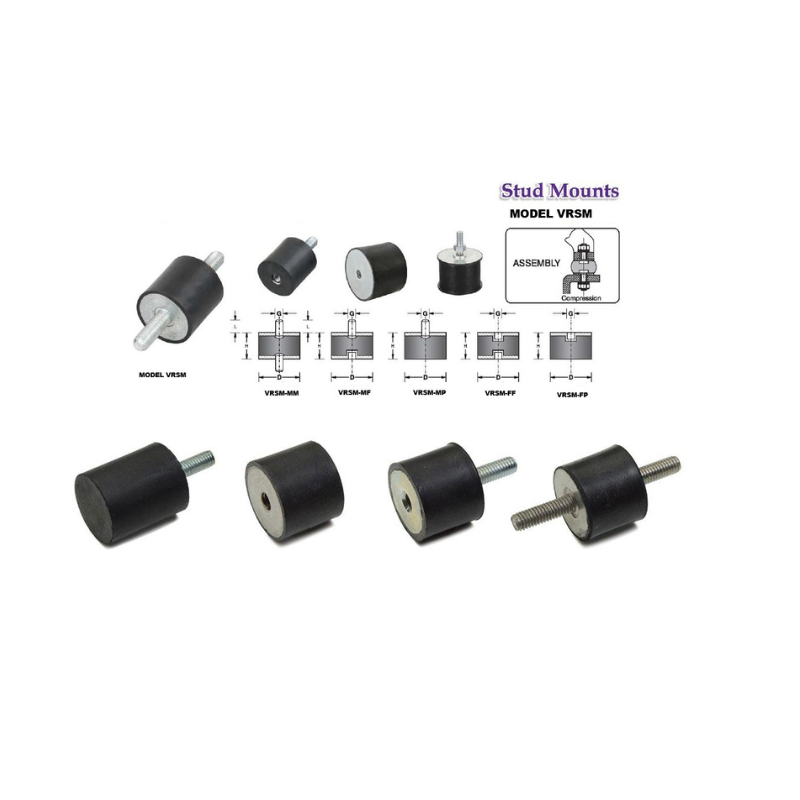
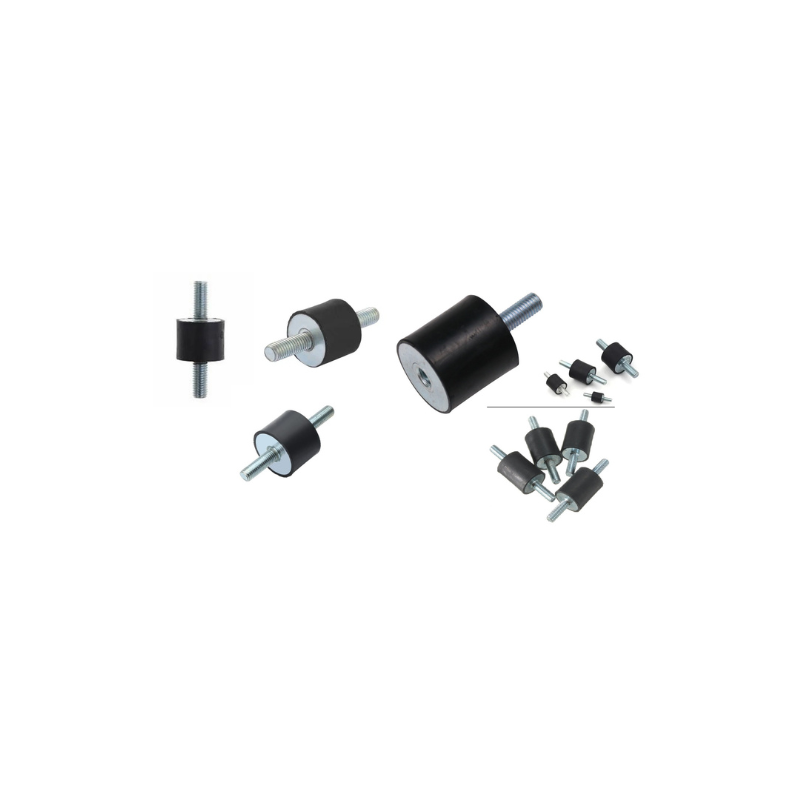
Description
Based on the document’s conclusion section:
Vibration Isolation
- Effectively reduces noise and vibration transfer between machine components. “Helps reduce noise and vibration transfer between parts.”
Durability
- Constructed using resilient rubber and alloy steel for long service life. “Made from resilient rubber materials that withstand wear and environmental factors.”
Easy Installation
-
- Available in multiple mounting configurations (single stud, double stud, tapped hole). “Typically designed for straightforward mounting in various configurations.”
High Shock Absorption
- Rubber’s high shear modulus allows it to absorb greater vibration stress before deformation.
“Rubber vibration absorbers… can absorb greater vibrator stress before breakage or transferring the vibrations.”
Material Composition
- Rubber Jacket: Natural rubber (various durometers depending on model)
- Metal Core: Alloy Steel
Finish
- Black finish
Thread Type
- M4, M6, M8, M10, M16, M24 depending on model
Load Capacity
- Ranges from 2 kg to 20,500 kg depending on model size
Natural Frequency
- Typically 6–15 Hz, depending on mount size and load
Available Sizes
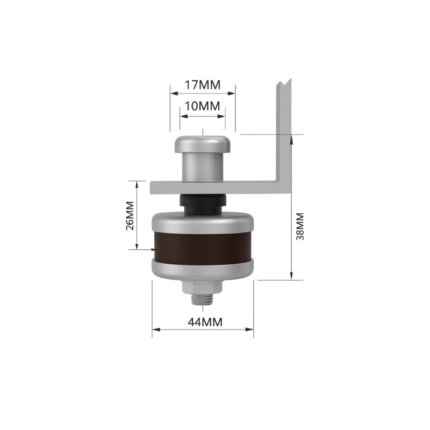
- Diameters: 10 mm to 250 mm
- Heights: 9 mm to 125 mm
- Thread Lengths: 16 mm to 80 mm
As described in the document, stud mounts are widely used in:
Industrial Equipment
- Compressors
- Pumps
- Motors
- Machine tools
- Gensets
- Material handling equipment
- HVAC Systems
- Air conditioners
- Ventilation units
Vibration Isolation Efficiency
- Recommended isolation: ≥70%
- Transmission: ≤30%
Rubber Hardness Options
- 40 Shore A: High damping, low load
- 55 Shore A: Balanced
- 70 Shore A: High load, lower damping
Available Types
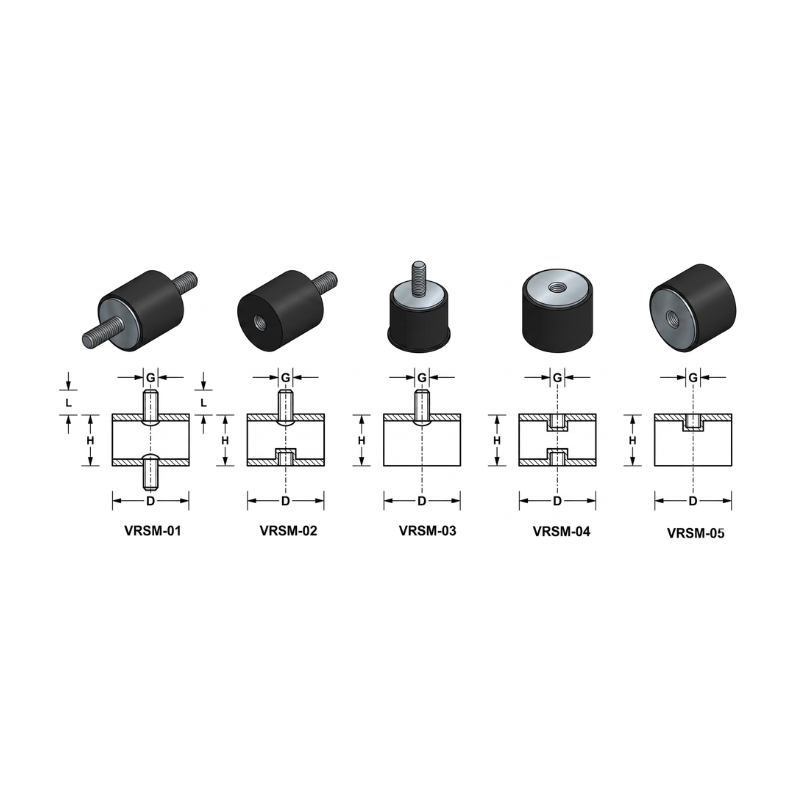
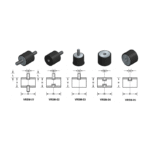
- Single Stud
- Double Stud
- Single Tapped Hole
- Double Tapped Hole
- Stud + Tapped Hole Combination
- Determine total equipment weight
- Identify number of mounts
- Calculate load per mount
- Determine running speed
- Select mount based on required static deflection
- Load capacity
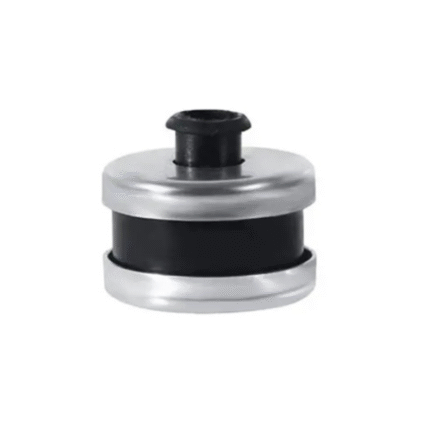
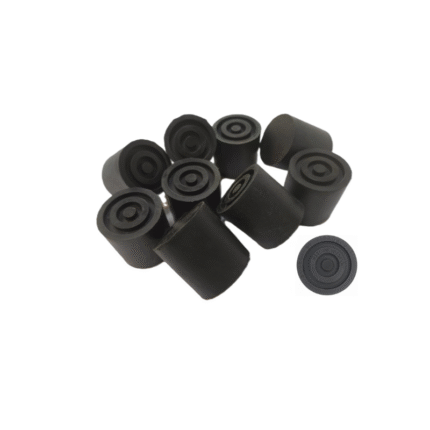
Shock‑absorbing mounts are available in multiple configurations—including single stud, dual studs, single tapped hole, dual tapped holes, or a stud‑and‑tapped‑hole combination—providing flexibility in how they are integrated into equipment. When a component requires support on only one side, a rubber bumper is typically more suitable. In such cases, the designer may select either a tapped‑hole or stud‑type interface, as mounting configuration has no significant effect on performance; damping characteristics are governed primarily by jacket durometer, height, and material composition.
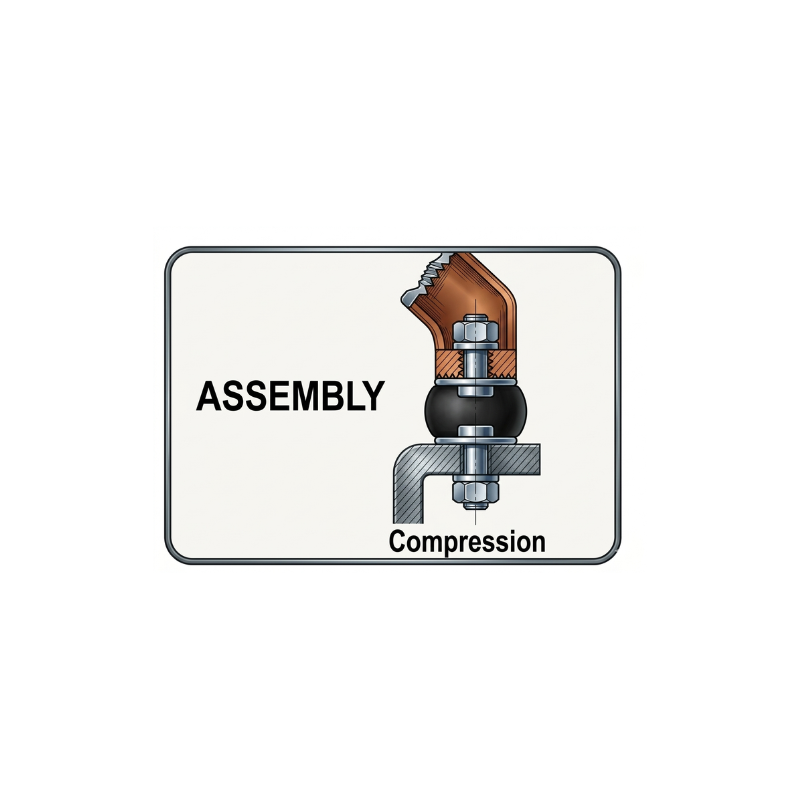
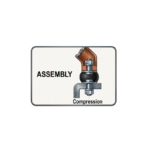
In contrast, installing a vibration isolation mount is more complex because it must be secured from both ends. These mounts are designed to mechanically couple two machine components while simultaneously providing shock and vibration attenuation. Positioned between two structural surfaces, they stabilize the assembly and reduce transmitted dynamic forces.
It is important to note that vibration mounts are wear components and will require periodic replacement. The machine’s use of studs, tapped holes, or mixed interfaces influences both the initial assembly process and the ease of servicing when replacement mounts are needed.
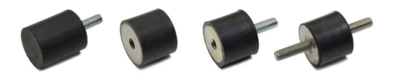
There are several different vibration mount configurations to match a variety of application needs.
Vibration isolation Stud Mounts and rubber bumpers exhibit different damping and shock‑absorption characteristics due to variations in geometry and jacket material. Outer diameter, length, and material composition directly influence impact‑load performance. Larger‑diameter mounts accommodate higher impact forces but may be restricted by installation clearances. Longer mounts provide increased separation between components but typically withstand lower impact loads than shorter mounts of the same diameter.
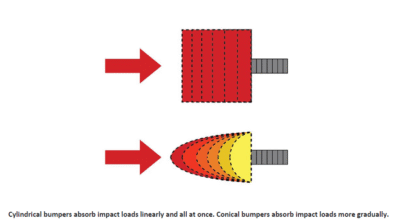
Conical rubber bumpers offer superior impact‑load resistance through progressive energy absorption, providing a more controlled deceleration compared to standard cylindrical bumpers. This enhanced resilience, however, increases cost and may exceed the requirements of some applications.
Impact‑load capacity also correlates with jacket durometer hardness.
- 40 Shore A: soft, high‑damping, lowest load capacity
- 55 Shore A: balanced stiffness and damping
- 70 Shore A: highest impact‑load resistance, increased rigidity